
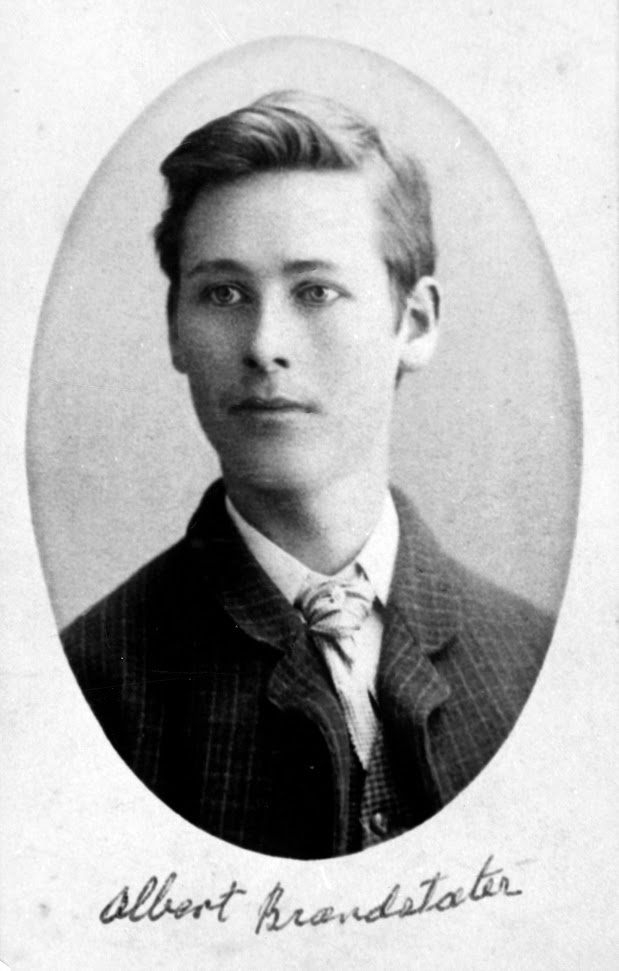
Those who belong to the Australian Brandstater tradition don’t know much about Albert Brandstater. Yet what we do know reveals him as an upstanding , talented young man who pursued higher education in America. He married a loyal American wife, and after a limited return to life in Tasmania, he adopted the United States as his permanent home where he developed a successful professional career.
Some uncertainties surround Albert’s early beginning. He was the first child born to Emanuel and Carolina Brandstater after their arrival in Tasmania in 1872. This island was still a British Crown Colony and therefore, although a native Tasmanian, Albert was a British subject. He could claim Australian citizenship only later, after the six separate colonies came together and formed the new country of Australia in 1901.
There is a question about Albert’s legal birth name, though official records in Tasmania would surely settle the matter. All of us in the Australian family have always referred to him as Albert. But we discovered much later that in California his American family knew and remember him as Charles, an alternative name that surprised us. In this history we will call him Albert, leaving the name Charles to the later, youngest son of the First Family. We have consistently known this younger brother as Uncle Charlie.
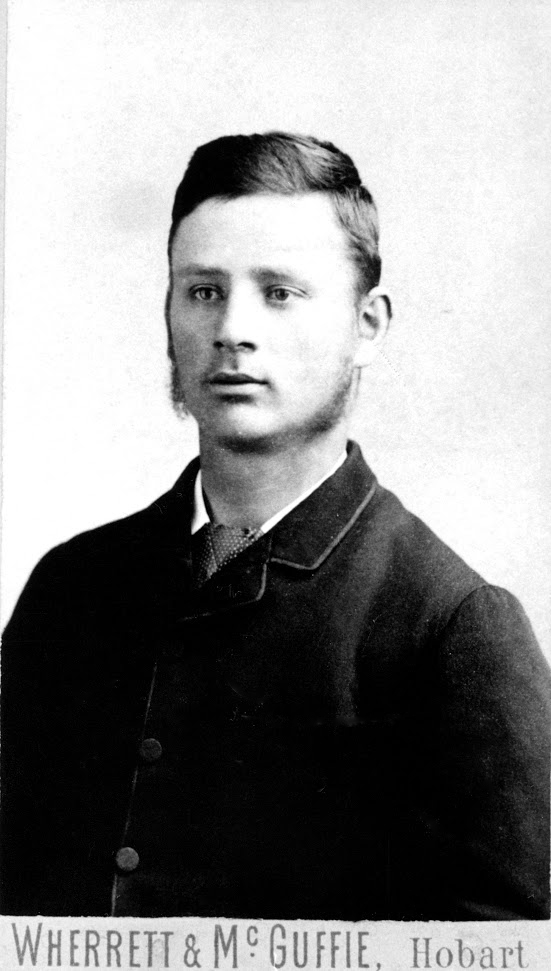
These early uncles were a precious connection between our era and those first settlement years. When I (Bernard) was a schoolboy in Sydney I did have some acquaintance with our great uncles, who were members of the First Family and who had sailed together and arrived in Hobart 1872. The ones I knew were Gustav Adolph (Uncle Arthur) and Herman. But life turned out differently for young Albert. We have a good photo of Albert as a young man, taken before his departure to Battle Creek. But after his abbreviated sawmill enterprise with his brother Emanuel Jr, we lost contact with him. We saw no more of him until the late 1930s, when he and his son Kenneth visited Sydney harbor, as part of a Pacific Ocean cruise. I remember well the Brandstater family reunion we enjoyed on that day, when a group of family members gathered in Sydney’s beach suburb of Manly, to honor the visitors from California. We have a good photo of the three brothers, Gustav, Herman and Albert, together with Ken, during that visit. Albert spent most of his life, with his family, in California, following his profession of dentistry in a regular, disciplined practice. It was forty years later, long after Albert’s death, that my family and I were able to connect with his sons Glen and Kenneth in California and became acquainted with their hopeful American descendants.
Albert’s earliest years were spent, first as a baby, then a schoolboy, and later a vigorous teenager, while living in the early Brandstater house on Springdale Road in Bismarck, Tasmania. His father Emanuel Sr. had built this house for the family on a 37 acre section of farmland that he had acquired on generous terms from authorities in Hobart. Their job was to encourage men to open forested land to make room for cultivation of fruit and vegetables for the domestic market. So through his early years Albert was surrounded by a mixed farm, with cultivation of healthful fruit and vegetables, plus the eggs and dairy foods provided by their cows and chickens.
The house was some distance, possibly two miles on foot, from the village school that had been built by his father in 1876. So Albert did a lot of walking during his years in school. In the English tradition of his era, those years would have stretched from age 5 to age 14, though we don’t know how far into the high school years the public school in Bismarck could take him. By his mid-teens he would have been robust enough to do his fair share of heavy farm work. In the fruit picking season, apples, raspberries and gooseberries had to be harvested at exactly the best time, and that was also true of other crops like hops. The harvest season for the farms in the community required the help of every able-bodied person in the village, including youngsters like Albert.
What we do know about Albert is that he grew into a good-looking young man, with a mind to match, and was very likely influenced by the counsel of Ellen White when she visited Bismarck in 1895. Meeting these robust, thoughtful young Brandstater men, Gustav Adolph and Albert, both of them apparently locked into a narrow life on the farm, with limited future, Ellen White urged some further education, recommending the broadening effect of studying in Battle Creek College in Michigan. She saw the value to these young men of exposure to foreign travel and different cultures. Gustav Adolph was old enough to act soon on this advice, but the younger Albert had to wait some years for his turn to come.
At last it did come, and we can only imagine what painful family separations were involved. Neither Gustav nor Albert left us any descriptions of the studies they undertook at Battle Creek. They were dealing with educational methods at a different level, and very different from the traditional English approaches they had learned in Bismarck. In Battle Creek they would have faced some of the classic English subjects, including even the famous classical “Greats” that then marked most educated men: Latin, Greek, Philosophy and English Literature. In addition to stern book work, Albert would have been required to do many hours of work in the Kellogg Sanitarium, to help pay for his tuition. But we have no records of that. He would have joined the circles of sociable young Adventists who were either studying or were employed in Battle Creek. This group had social gatherings in Ellen White’s vacant house. His brother Gustav Adolph had preceded him in making new friends there, and as a result Gustav had married another visitor from Australia, Florence Grattidge.
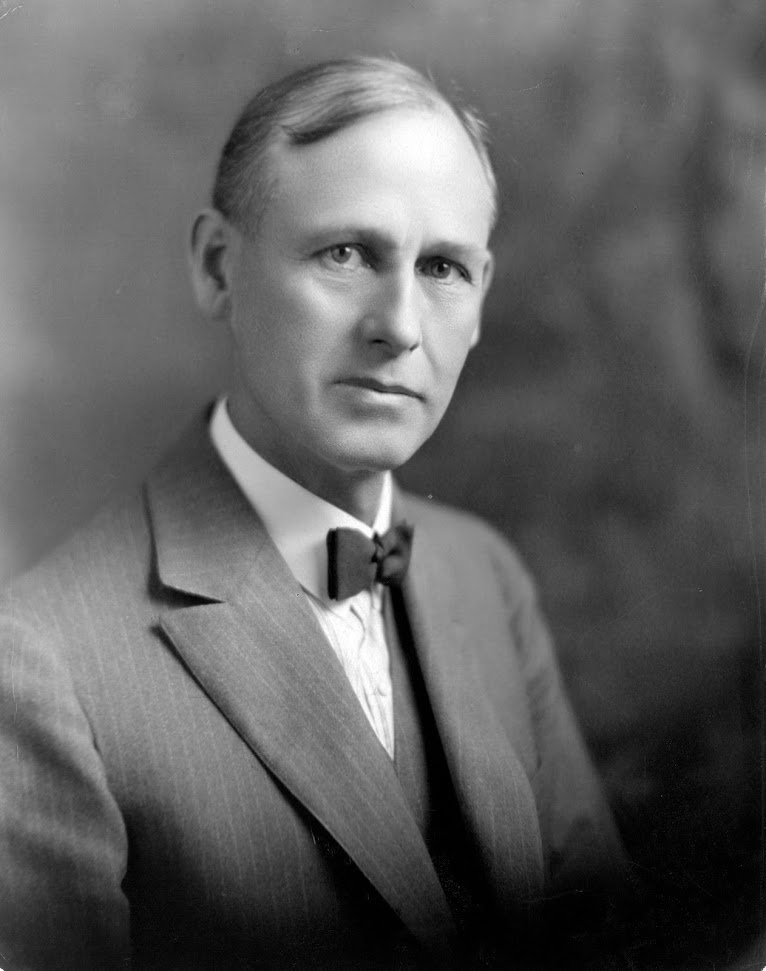
One feature of Albert’s life in Battle Creek that is significant was his talent with music. It was his son Kenneth who reported this to me, described from many reminiscences that passed between father and son. Albert was an active contributor to the music life at the College. It was likely a continuance of the music-making pleasures that he had enjoyed in his home community of Bismarck. He had a good singing voice, which was true also of other young Brandstater men from Bismarck, like Charlie, Gordon and Roy. At some point he joined a young woman named Margaret Kessell in singing fine vocal duets and they were eventually joined in marriage. We cannot tell much more about the Kessell family, but Margaret remained a sturdy part of the Brandstater family for the rest of her days. For some time after college, she and Albert formed a two-person evangelistic team. They were noted for their vocal talents, singing together and touring in the southern states where gospel music was popular. They sometimes even performed on river boats. Ken spoke proudly of that part of Albert’s life, although he described his mother Margaret in less glowing terms as a harsh disciplinarian. In time Margaret became better acquainted with the Australian Brandstaters, as she accompanied Albert when the time came for him to return to his home country and to his family in Tasmania.
We may wonder what kind of career awaited Albert in Tasmania. What we know is that he entered into a business partnership with his older brother, Emanuel Jr., to establish and operate a timber mill in the village of Bismarck. Both of the brothers had done a lot of timber work in their young growing years, and Emanuel Jr had acquired hands-on knowledge about steam engines and sawmill machinery. For a while, that Brandstater mill was successful. It was situated on the banks of Sorrell Creek that flowed through the village, and on an access road engineered for them by the county, and named Mill Road. It supplied much sawn hardwood, a commodity that was desperately needed for building construction work, then very active in Tasmania.
During that period in Tasmania, Albert and Margaret occupied a fine house that Emanuel Jr. had originally intended for his own young family. But in deference to the refined tastes of this new-coming American wife, the house became Margaret’s domain. Margaret had borne two sons previously, Oliver and Glenn, and while in Bismarck she gave birth to the youngest, Kenneth who subsequently was proud that he had been born an Australian. Meanwhile Emanuel Jr and his family moved to another house-and-farm at the end of Valley Road. Years later, this was the house and farm that became the property of Fred and Lydia Peterson.
Success at the Brandstater mill on Sorrell Creek did not last. At an undetermined date, the whole mill property was destroyed in a disastrous fire. So the enterprise that might have stabilized Albert in his home country, amongst his own people, became a grim failure and the partnership of brothers broke down. Both Emanuel and Albert had to find new sources of livelihood and new careers. Albert and Margaret weighed their options, and they decided to return to the U.S. where they could be closer to Margaret’s family, and Albert could pursue a professional career that he had chosen. It was dentistry. We do not know what led Albert to be attracted to dentistry. But his collegiate classwork in Battle Creek provided him with the credentials to get accepted into dental school at Stanford University. So Northern California became, during years of serious study, the home for Albert and Margaret. Apparently he was a competent student, and passed all his exams. He chose to set up dental practice in Los Angeles.
The rest of Albert’s life story was lived out in California, in the big city we know as Los Angeles. By searching, I found some traces of his presence there. In the early 1970s I met Dr. Lonser, who was a physician who had graduated from medical school at the College of Medical Evangelists in 1946. He remembered Albert as a church member, and also the office where Dr. Albert Brandstater had practiced dentistry in his early years. It was located on what is now Cesar Chavez Avenue, directly opposite the White Memorial Hospital.
Albert may have been influenced and helped by another Brandstater immigrant, William, the son of Gustav Adolph, who had been busily engaged developing a sanitarium in the New Zealand city of Christchurch. I met this William only once, in 1970, with his daughter Beverly, in their home on Doran Street in Glendale. I was taken there to meet them by cousin Ken Brandstater, and by Ken’s comments I gained the impression that these related families had kept a close connection. As a young man, William had left his family in Christchurch and had sought larger horizons in Los Angeles. There he became a physical therapist and he practiced in that field all his life. He and his wife Ruth and their daughter Beverly were well known members of the Glendale City Seventh-day Adventist Church. I understand that Albert and Margaret were also participating members of that church.
Albert and Margaret produced three sons, Oliver, Glenn and Kenneth, and the family lived in Ls Angeles. We have an excellent photograph of all five of them in those early years. They participated in the life of the Glendale City Church, and we can assume the three sons also took part in some of their church life. But their family life was described to me as not smooth and conducive to religious pursuits and Ken described Margaret as a stern disciplinarian
We are indebted to Kenneth for almost all that we now know about this early family. All three sons studied responsibly, and became credentialed dentists. The years of the War in the Pacific involved all three of them in some sort of military service that interrupted their pursuit of dental practice. They were distracted by other social pursuits as well.
Ken married a beautiful young woman named Mary Gaylord, and engaged seriously in dental practice in Los Angeles. In 1952 he drove me on a tour of Los Angeles, and pointed out the location of his dental office on Hollywood Boulevard. It was in August 1952 that Neridah and I first arrived in Los Angeles. There we enjoyed the hospitality of Ken and his wife Mary, with their two super-active young boys, Al and Bill.
So Ken Brandstater, Albert’s youngest son, became a leading member of the Californian branch of the Brandstater family. He took a keen interest in his grandchildren, and also in the larger family in Australia that his father had left behind. Cousins Gordon and Russell Branster had both visited Kenneth and his family in Los Angeles. Also, through his father Albert, Ken had learned about his cousins in Berlin, Wilhelm and Louisa Beutenmuller and their children. So at the end of World War II, with Berlin in ruins, Ken was able to contribute to helping young Willi and Gerda Beutenmuller and family after they had received permits to emigrate. They needed financial help to enable them to migrate to the New World, and finally settled in Los Angeles.
There is not much more we can recount about the life and career of Albert Brandstater. But there is a single photograph of the three aging brothers and the younger Ken when they visited Australia and met with other members of the family in Sydney. We still have more to learn about Albert’s later health issues, his last illness, and his final resting place.
Early in our life in Redlands, my father Roy and I were driven by Ken out to Palm Springs where Ken took us to greet his long-widowed mother, Margaret, at her retirement residence. She was bright-eyed and clearly delighted to meet at last some of the Brandstaters of whom she had heard much, but whom she never expected to meet. We were also pleased to meet this engaging lady who had shared an active life with Uncle Albert Brandstater. We all knew, and she heartily concurred, that he was a good man and now represented by four capable descendants, grandchildren of Kenneth.

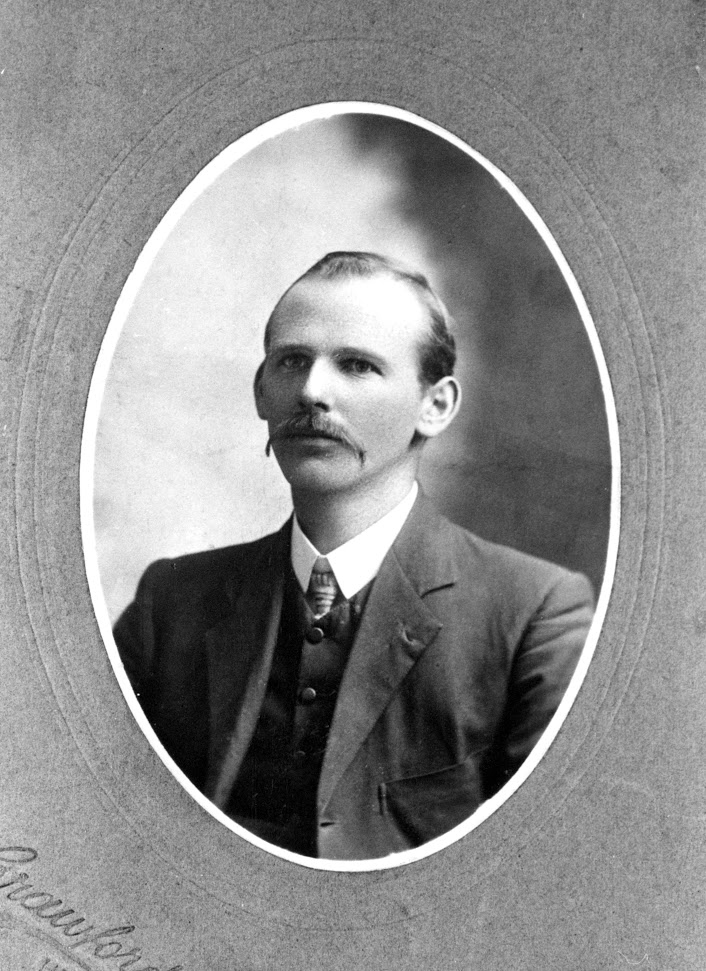
His formal name may have been Charles, but he was always referred to as “Uncle Charlie”, an informal, friendly name. Later reports tell us that the name described his personality well. Two older brothers, Albert and Fritz, were born to mother Carolina after the family’s arrival in Hobart on the SS Eugenie in 1872, and Charlie was born in 1876.
The family made their move from Swansea to the village of Sorrell Creek in several years after their arrival in Tasmania in 1872. That village, Sorell Creek, where the family established their permanent home, was later renamed Bismarck by the German settlers who settled there as farmers or timber loggers. The name was changed again during the Great War of 1914 to 1918, when Germany was a wartime enemy. The village of Bismarck was renamed Collinsvale.
Charlie received his formal schooling in the public schoolhouse in Bismarck, which had been built in 1876 by his father Emanuel. It was along walk to school every day from the Brandstater homestead on Springdale Road, down the hill to the school in the center of the village. We do not know how much high school education was available at Charlie’s age. But in those years Tasmania was still a British Crown Colony, with strict English education standards. In one letter from his daughter Thelma, Charlie was described as “a great reader”. At about age 16 he was given an apprenticeship in carpentry, in which he did well. With those skills he worked for many years building and selling houses throughout Tasmania. His work was well respected, and he advanced to do sub-contracting work for the Tasmanian Public Service.
Charlie started his career in construction at a young age, and he chose to live wherever construction work was available. In the First Family portrait he is a young man in his twenties, good-looking and robust. In due course he married in 1928 an 18-year-old Dorothy Matilda Smith (a Bismarck girl born March 24, 1910). Dorothy was the youngest child in the Smith family, the only daughter amongst five brothers. They were fiercely protective of their young sister, and that was a reality that Charlie had to deal with when he courted Dorothy. They may have met at the Methodist Church in Montrose, where both of them sang in the church choir. Within a year of their marriage Charlie and Dorothy were blessed with a baby daughter, Thelma Dorothy, born January 18, 1911. And just sixteen months later a second daughter arrived, Beryl Hope, born April 13, 1912. Those babies did not interrupt their parent’s singing in the choir. In her later memoirs, Thelma remembered sitting in a cold church in winter evenings, waiting for choir practice to end.
Music was an important part of living for both Charlie and Dorothy. Charlie’s musical talents were prominent in his young years, and he had a fine singing voice. Outside of church, he often sang in the bush. He believed that feet were made for walking, and as a lad he often attended carpentry classes that were held fourteen miles away in Hobart. He could walk that distance fast by taking short cuts through the bush, though sometimes it was scary walking home at night through the dark bush. He explained to Thelma that his solution was to sing hymns at the top of his voice until he could see the glimmer of lights that signaled he was nearing home.
Charlie’s robust singing voice was a noteworthy gift of a series of Brandstater men. His older brother Albert served as a singing evangelist in the southern American states, after finishing studies at Battle Creek and before he returned to Tasmania. Jeff Brandstater, Ernest’s son in Christchurch, was well known in New Zealand as a favored church vocal soloist whose rich baritone impressed me in the 1940’s when he visited our home in Adelaide at the end of World War II. Brothers Gordon and Roy both had strong solo voices, sometimes heard performing at camp-meeting time.
More than a vocalist, Charlie followed the example of his brother Fritz and other Bismarck friends who formed that community’s brass band. He became a good cornet player, and for a time he served as band-master-conductor for a band that flourished at the large zinc works north of Hobart. Charlie was simply a versatile, capable man who could assume leadership roles comfortably. For her part in music, Dorothy was a keyboard player, and served for a time as organist of their church. She also was popular as a music teacher. In a different direction, Dorothy was an excellent seamstress, and was employed as a demonstrator by the Singer Sewing Machine Company in Hobart. When she left the Company to marry Charlie, the Company presented her with the gift of a Singer treadle machine which remained in the family for many years.
After living for some years in Montrose, Charlie took Dorothy and their two daughters and moved to Geelong in Victoria. Charlie found reliable employment there, helping to construct the big new Ford car factory. During those years the two daughters began to plan for their future employment. Thelma, at age 14 years, commenced an apprenticeship in hairdressing at a place known as A.G. Hall. Beryl continued in school until the legal leaving age of 14 years, then enrolled in the Gordon Technical College, where she completed a commercial course in office procedures. That meant the basic skills of shorthand, typing and record-keeping. Equipped with those skills, Beryl was employed by F.L. Hoopers.
After some years in Geelong, Charlie moved his family to the Sydney suburb of Camperdown where good work was offered to him. We don’t know much about Charlie’s later career in the big city, which must have included a continuing involvement in construction work. Nor do we know anything about his final illness. So to complete his story we may now follow some details of the two Brandstater daughters, Thelma and Beryl, and their children. We have commentaries about father Charlie written by both these daughters, who had connections in both Geelong and now in Sydney. They provided me with personal memories of their father Charlie and their mother Dorothy, and their occasional visits with members of the now-scattering Brandstater family.
Thelma was the first daughter to marry. Her husband was named Martin Breem. They lived in Sydney, where Martin’s father worked as a lighthouse keeper in Queenscliff. They had one daughter who was named Marian Joy. This Marian was an interesting woman who wrote a long informative letter to me in 1998. It was expertly authored, and was probably triggered by a Brandstater family reunion that my daughter Suzanne arranged in a rented hall in Wahroonga on one of my visits to Australia from California. News of this forthcoming family reunion filtered out through the family network in unknown ways, and in the rented hall that evening I met cousins and other connected people whom I had never heard of.
By the time of that reunion gathering, Marian had been long married to a man named Frank French, and they had two daughters, named Zarli and Julie. Her husband must have died early, from causes unknown. Soon after sending that letter to me, Marian made a holiday tour to the United States, and visited some of us Brandstater relatives in California. Ten years or more later I had the pleasure of visiting Marian at her retirement home in Kincumber, a coastal resort town on the New South Wales Central Coast, close to Gosford. I was joined in that visit by cousins Don Brandster (Brandstater) and Milton Smith. Marian treated us graciously, showing us the large garden where she proudly grew a sizeable crop of commercially valuable lavender. Years later I heard that she had moved from Kincumber to live close to one of her daughters in Sydney.
Beryl’s story is quite distinct from her sister’s. She continued to live with Charlie and Dorothy in Camperdown, but later met Henry Norman Bennett who lived in Geelong. Beryl spent many weekends visiting him there, and they were married on March 27, 1937, establishing their home in Geelong. In later years, Beryl and Henry Bennett made a grand tour to the U.S., and during that tour they were able to make visits to several Brandstater families living in Southern California. I was living in Redlands at that time, as were my sister Rhona and my parents, Roy and Frances. But the visitors also made connection with Kenneth Brandstater, youngest son of the deceased Uncle Albert and William Brandstater, son of Gustav Adolph Brandstater, who in the early 1900s had developed a sanitarium in the city of Christchurch in New Zealand. William had developed a successful practice in physical therapy in Glendale and Los Angeles. I (Bernard) felt pleased to be able to join this gathering of Brandstater people, and take a photograph of this rare event. We were coming together from different generations of the family, and from different places in Planet Earth. But I was nostalgically moved by seeing how we all felt a level of exceptional family bonding. We had all each inherited a small share of Brandstater genes.
Beryl and Henry had two children: Valma Louise and Pauline Rhonda. Valma married Roger Sykes, and they had three children: Carolyn, an accountant; David, who managed his father’s transport company, and Andrew, about whom we know very little. Pauline, the other daughter of the Bennetts, married John Wallace Cranney, and they had three girls: Suzanne Beryl (born 1966); Sandra Jane (born 1969); and Allison Maree (born 1971).
This youngest daughter of Pauline, Allison, is now leading an active life in Geelong, Victoria. Allie became well known to us. She married a man named Dallow, and they produced three bright, energetic children: Bella, Shae and Angus. But this marriage was not long-lasting, and Allie became a single mother. Now on her own resources, Allie was successful in the practice of audiology. She was so successful that she was recruited by a major hearing aid company to supervise a string of their offices throughout Australia. I (Bernard) have become well acquainted with Allie and her three children, because all of them, including Allie, spent time as our guests in the Dwight Street Brandstater home in Redlands. This happened around 2014 or 2015, and it was clear that Allie has done an outstanding job in raising those three youngsters. They have good polite manners, and consistently cheerful behavior.
I have no way to tell to other Brandstater people what events marked Charlie’s closing years. It is likely that he and Dorothy continued to connect with the Methodist Church, probably near where they lived somewhere in the northern Sydney beaches. They therefore missed some of the social events that engaged many other Brandstater people, most of whom had developed ties with the Adventist church community. Charlie and Dorothy lived for years close to the home of Uncle Herrman, his older brother, and Aunt Minnie in Brookvale. This was a part of Sydney that was close to the Pacific Ocean beach. Lacking news of Charlie, we are at least able to report the news from Marian French, sent in a letter to us in California in 1998. She told us, with pride and pleasure, that at the time of her writing, her mother was “still hale and hearty” at age 87.
Charlie and Dorothy lived out their appointed life spans usefully and cheerfully. Charlie did show some tender affection for his aged parents, Emanuel and Carolina, during their late years in retirement. Their last house address, today, is: 507 Main Road, Montrose, TAS 7010. In their old age, Charlie must have paid them a loyal visit, expressing love from their youngest son. There, on a front window pane of that ancient colonial house, is engraved, with a glass cutting tool, the signature of their baby boy, Charlie Brandstater. It is still clear and readable today, after more than a hundred years.
Initial settlement in Australia: Collinsvale (Formerly – Sorell Creek, Bismarck)
Collinsville is a small township located in a picturesque valley 12 miles from the city of Hobart, Tasmania. It is 6 miles inland from the north Hobart suburb of Glenorchy, and is completely surrounded by hills and mountains. Access to the valley is via a winding road over Pierce’s Hill, a steep hill that for the early settlers made transportation into and out of their community a difficult challenge.

Early view of Collinsvale
In the early nineteenth century the area was covered in virgin bush and forests, and there was fresh water flowing in a small creek called Sorell Creek, named after William Sorell, an early governor of the colony. Because the land was cheap a few English immigrant families moved into the valley and began to farm the land. Some Danish and German immigrants arrived in 1871 and settled into the valley, and some more German immigrants followed in 1872. The Brandstater family joined the community several years later after Emanuel had completed working on contract with a landholder in Swansea.


The tall trees throughout the valley had to be cleared to make way for the development of farms and the settlement. Sawmills were set up early in the valley to provide the lumbar to build houses for new arrivals and for other buildings, including a school, two churches and a town hall. Most of their interior furniture was also made from lumbar milled in the local sawmills. Lumbar was also exported out of the valley to Hobart and along with fruit was an important source of revenue for the town. The settlers cleared the trees using hand saws and axes, work that required skill, strength and persistence given the enormous size of some of those trees, as shown in the old photographs. The tree stumps were cleared with gelignite. The settlement consisted of a collection of farms – there was no recognized town, and the area was simply called Sorell Creek.
The land was only moderately fertile and those early settlers, initially without ploughs, had to turn the soil by hand using picks, mattocks, hoes and forks after clearing the trees and bush. However many small fruit farms were eventually established, the main produce being raspberries, gooseberries, currants and loganberries. There were also apple and plum trees and many kinds of vegetable such as potatoes. The valley became quite productive and loads of fruit and other farm products were regularly transported to markets in Glenorchy and Hobart. Most of the houses were built close to Sorell Creek or near a spring because all fresh water used domestically had to be carried from the creek.

By 1881 the settlement had grown sufficiently in size to be proclaimed a town and was given the name Bismarck after Otto Van Bismarck the German Chancellor. There was no store in the town and settlers had to purchase their supplies by traveling 5 miles there and back over Pierce’s Hill to Berriedale where there was a railway station and general store. In 1882 the first post office was established in Bismarck, the mail being brought in regularly by horse-drawn buggy from Berriedale. The mailman then began to bring in supplies with him in his horse-drawn buggy on his daily mail trips to and from Berriedale and he soon established a store in Bismarck along with the post office.
During World War 1 the conflict with Germany led to some resentment in the town about the name Bismarck, and a petition was sent to the Tasmania State government requesting a change in the name from Bismarck. This was opposed by many of the early immigrant settlers, but as was done elsewhere in some other places in Australia, in 1915 the German name was changed, and given the new name Collinsvale, named after Colonel David Collins, who had established the colony of Van Dieman’s Land at Hobart in 1804, and remained governor until 1810. The colony was renamed Tasmania in 1856, and was still receiving convicts from England until 1868. It was during World War 1 that anti-German sentiment became quite strong in Australia, and several members of the Brandstater family shortened their family name to the less German-sounding Branster.
Bushfires in the region were a constant threat, and on several occasions reached the town and destroyed numerous buildings. The schoolhouse that was built in 1876 under contract by Emanuel Brandstater was burnt down in 1900 in one of those fires, along with a sawmill owned and operated by the Brandstater family. The market for raspberries and small fruit gradually declined and over time the fruit farms were changed into small holdings of sheep and cattle. These farms were small and could no longer provide sufficient income to support a family. People began to commute into Hobart to work or simply move away. In a recent census the current population of Collinsvale was 844. Some memories of growing up in Collinsvale have been described in a personal memoir by Roy Brandstater, recorded as an oral history by Maurice Hodgen
This is an account of the life of Emanuel Brandstater Jr, oldest child in the first family of Brandstater immigrants who arrived in Tasmania in 1872. This Emanuel was an important figure in the unfolding of the Brandstater family in Australia. He was big in body and big in heart. He lived an active life that touched many other lives, and he produced seven children who made notable impacts on their own offspring and on the world about them. So to do justice to his memory will require that we tell to his story in some detail.
This Emanuel Jr was the first child of our Emanuel Sr and his wife Wilhelmina Justies, both being natives of the city of Gumbinnen in East Prussia. Their Baby Emanuel was born in 1862, and his birthplace, recorded in his naturalization papers, was a place called Surmunin. We have not located this place exactly in early maps, but it was probably a small town close to Konigsberg, the large capital city of East Prussia. At that time his young parents would have been living close to Emanuel Sr’s place of employment, as carpenter and shipwright in the busy Baltic seaport nearby.
There are few records about Emanuel’s early life. He was ten years old when his family made their epic migration and voyage from Hamburg to Hobart. He had spent those prior years in a German culture, with German-style schooling, learning German alphabet and reading, plus doing some basic arithmetic. He left no letters, no written schoolwork, and no comments about his early life in East Prussia. He had to start a new education when he arrived in Tasmania as a ten-year-old. He attended a public school in the seaside town of Swansea, where his father had found his first employment. And we can assume that his Germanic tradition of disciplined attention to study helped him to get an early grip of the English language that surrounded him there.
With no typewriter, and limited skills in written English, Emanuel left behind no handwriting except his personal signature in a book rescued from the library of the Seventh-day Adventist Church in their final living-place, Bismarck. This was a farming village about twelve miles from Hobart, and the new-coming Brandstater family settled in that village as their eventual long-term place of work and residence. While he was no literary scholar, Emanuel certainly could read. And at a time when books were an expensive luxury in a humble farmhouse, he had access to a lending library in the family’s church.
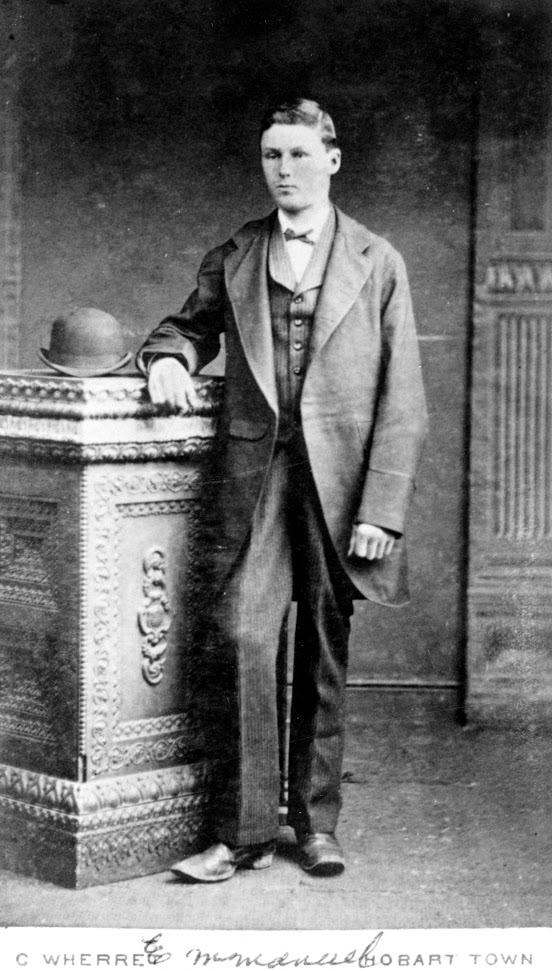
Our first photograph of Emanuel Jr shows him as a teenage boy, with no indications yet of the robust physique that lay ahead for him. Yet he is dressed in a full suit too big for him, and even sporting a bowler hat, scarcely suiting his age. In this photo he is shown in the early years when the family was settling in Bismarck. Yet it is noteworthy that even at that early stage the family attached importance to making a portrait record, a landmark photograph of their eldest son. And similar portrait photos were also recorded, later, of the other Brandstater young men, Gustav Adolph, Herman and Albert, when they arrived at the critical age of approaching manhood.
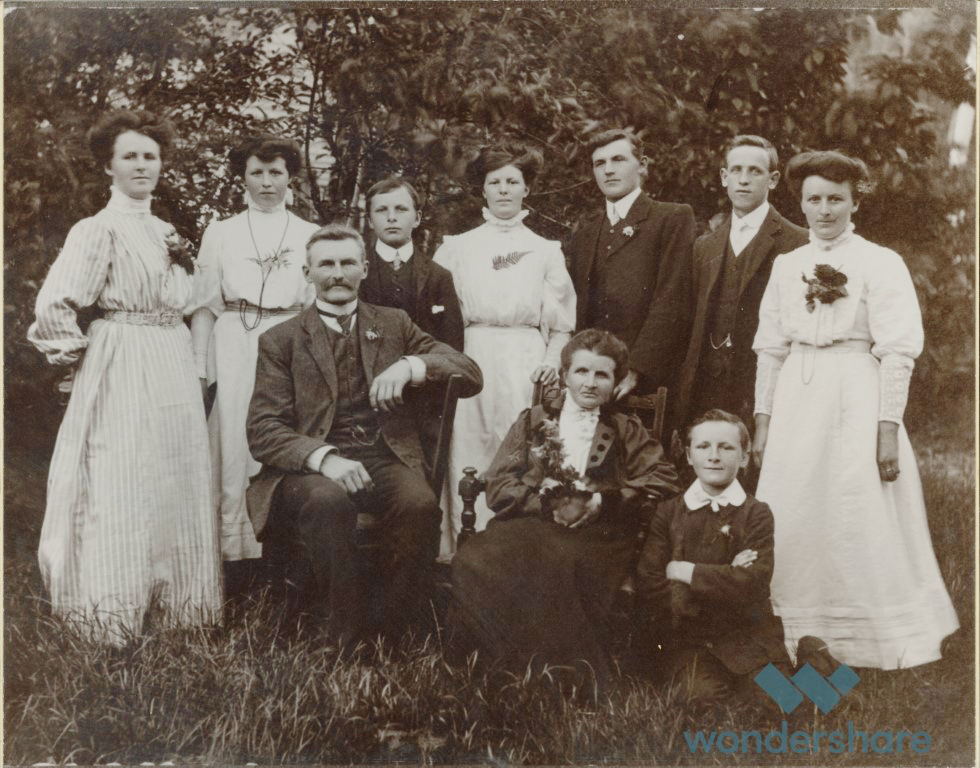
After that early photo of Emanuel, we have no other image of him until he shows up, about the year 1900, as a strong figure in a much later historic portrait of the original Brandstater family. He is shown sitting beside his father, with his wife Wilhemina standing beside him. The photo is a unique record that shows Emanuel Jr as a robust man of about 38 years of age. It also shows the other family members also in a good year. About 28 years had passed since their arrival in the “Eugenie.” But the family photo came many years later, when all scattered members of the First Family had gathered back home for a rare reunion. They posed for the camera in front of the original homestead built by Emanuel Sr on Springdale Road in Bismarck. The senior pioneer family heroes, Emanuel Sr and wife Carolina, were seated in the middle up front. Albert had returned at last from his studies in Battle Creek, with his wife Margaret. Gustav Adolph was home from his work in Christchurch. Herman was there too, with his wife Minnie. To complete the family, Carolina Jr (“Lina”) was there also, a spinster. That ancient house still stands there today (in 2018), abandoned and deserted, engulfed by trees and shrubs, sad and slowly decaying.
We need to return to young Emanuel Jr in Swansea. At that time in Tasmania, immigrants who had been transported to Tasmania under an assisted passage scheme were required to complete employment for a period of two years with an established settled citizen, to help repay the cost of their ship’s passage. So Emanuel Jr had spent about two years in the Swansea public school by the time the family had learned the new culture, felt stabilized in their new land, had perhaps saved a little money, and were ready to move on. That first stay in Swansea had been a good beginning, but they now moved to their permanent home in a place called Sorrell Creek, named after an early governor of Tasmania. This was a settlement in a secluded valley, about twelve miles from Hobart, a few miles off the main road north, and close to Glenorchy, a northern suburb of Hobart.
With an influx of new European settlers from two ships, the “Victoria” in 1870 and the “Eugenie” in 1872, Sorrell Creek soon found itself populated by a strong German-Danish mix of recent immigrants. In their hearts many of them were still celebrating the 1871 Prussian victory in the Franco-Prussian War, and were proud of the unification of the German states to form the German Empire. These events had taken place under the leadership of their national hero, Otto von Bismarck. So they gave his name to their farming village, calling it Bismarck. It was here that Emanuel finished his schooling in English, in the new classrooms constructed by his father in 1876 under government contract. He probably left school at the age of fourteen, and could then shoulder his responsibilities as the eldest son, helping his dad with the rugged hands-on work on the farm, in logging, or in construction jobs.
Advancing through his teens and at last into vigorous young manhood, Emanuel began searching for a wife. There was a limited number of eligible young women in their rather small farming community. During times of active immigration, arriving ships usually brought more risk-taking young men than women. But Emanuel did find and marry Wilhemina (“Mina” or “Minnie”), a daughter of August and Henrietta Darko (original German name “Darkow”). In the Tasmanian General Register Office their marriage took place on 8 January 1885. Emanuel’s occupation is listed as “carpenter”. His age was 22, and Minnie was 25.
This young couple needed to shape a career for themselves, and establish a home for the family that they hoped for. Emanuel’s employment options were limited. In young manhood Emanuel had joined with his devout Christian parents in their beliefs and practices of the Seventh-day Adventist Church. For a time, he worked in the role of “colporteur,” which is a seldom-heard word today. It required the door-to-door selling of books, and those that Emanuel was selling were on religious and health subjects, published by Seventh-day Adventist publishing houses. This work took him to another fruit-growing country district called Glen Huon. It was a rich, productive valley some fifty miles on the other, south side of Hobart. As a result of his selling a substantial number of books, a lively religious interest was created amongst the citizens of Glen Huon. Because of his inexperience with such matters, Emanuel called for help from a Bible teacher in Hobart. Soon an active worshiping company took shape in the district. In this way Emanuel was instrumental in helping to establish the Glen Huon S.D.A. church.
From his work selling books, and discussing them with thoughtful customers, Emanuel must have become more aware of other potential career possibilities beyond the boundaries of his farm surroundings. But he had obligations because of his status in the family as firstborn son, and the immediate needs of his wife and young children. He was four years older than his next younger brother, Gustav Adolph, and next came Herman and Albert, with fewer obligations. They were free to envision a larger world out there, with broader horizons than their quiet country village could offer.
So it was that two of those brothers, first Gustav Adolph, and later young Albert, left Bismarck in the 1890’s to seek further education in health care, and traveled to Battle Creek College in Michigan, where they studied under the disciplining eye of notorious Dr. John Harvey Kellogg. This thrust into higher education was a new, and perhaps surprising, direction within the Brandstater family, who in East Prussia had been farmers and laborers. They had had little expectation or opportunity for higher education. So Emanuel, the eldest son, applied himself to immediate tasks close at home, while Gustav and Albert were studying in Battle Creek.
Nevertheless, Emanuel was a man of energy and purpose. In the early years he had learned many practical skills from his father, and from one of his workplaces he had been able to learn the basic construction and mechanisms of steam-driven machinery. He could operate them, and when necessary, fix them. This was not formal education or apprenticeship. He simply had a natural aptitude for grasping the workings of things mechanical. He became the Bismarck expert for sharpening a blunt cross-cut saw, or for fixing somebody’s house clock that had stopped working. Through his skills at carpentry he became the coffin-maker for the community. As described by his son Roy, Emanuel was the leading man in the village to whom everybody would go when they had a mechanical problem to solve.
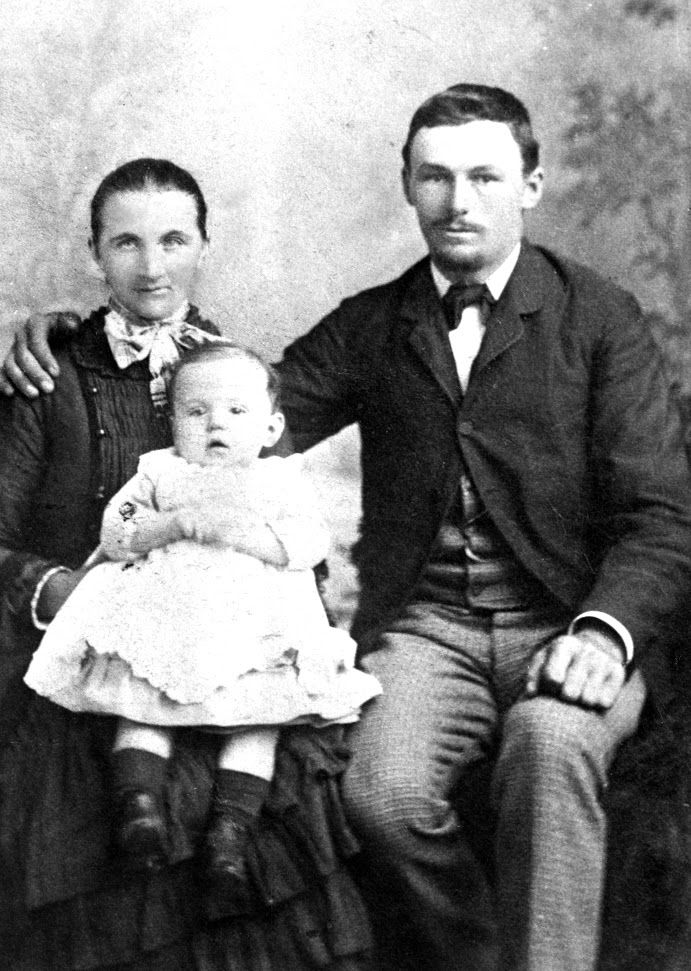
For several years, before the end of the 19th century, Emanuel’s growing family lived with him in Northern Tasmania, where he had a government job in road and bridge-building projects. After starting with baby son Ernest in 1886, an additional child was added to the family every year or two. It was here that the younger sons, Gordon (in 1896 in Upper Castra) and Roy (in 1898 in Melrose) were born. Their births were registered in the nearby town of Ulverstone, west of Davenport. Roy was one of eight children born to Emanuel and Minnie. One baby, Florence, died in early infancy, leaving seven vigorous survivors, of whom Roy was the youngest. Details of these children and their later careers are described elsewhere in this family website.
From Northern Tasmania Emanuel moved his family back to their original home territory in Bismarck. At an early stage they occupied a small house on Springdale Road, located, Roy once told me, behind August Totenhofer’s farm. These neighbors were also from East Prussia. It was from that time that Roy could later recall his earliest childhood memories of being led, as a mere toddler, across the rough fields between the house on their farm and his grandfather’s house a half-mile away. Roy remembered that from those earliest years, his closest playmate and pal was Howard Totenhofer, who later became a distinguished artist and a lifelong friend.
Emanuel moved his family again, this time to what was called “the church house”, situated behind the S.D.A. church, and owned by Minnie’s parents, the Darkos. The whole family now included: Ernest (born 1886), Annie (1888), Louise (1890), Lydia (1891), Florence (1892: died aged 2 months, cause not known), Ida (1895), Gordon (1896), and Roy (1898).
About this time Emanuel joined in a business partnership with his younger brother, Albert, recently returned with his American wife Margaret Kessler from studies in Battle Creek, Michigan. The two brothers established a sawmill in the heart of Bismarck on the banks of Sorrell Creek, near to where the Main Road now crosses the Creek by its bridge. Just beyond that bridge, a street on the right was opened by the county to give access to the mill, and this street today is signposted with the name “Mill Road”. That Brandstater mill was a successful enterprise, responding to the great demand for sawed construction timber. To provide Albert’s American wife with some of the amenities she was accustomed to back home, Emanuel assigned to her and Albert the occupancy of a fine new house he had originally constructed for his own family.
For his personal needs Emanuel took his own large family to live in a newly built house some distance away at the end of Valley Road. This place, with its surrounding farm, remained the family’s home until several older offspring moved out of town. It later became the farm property of Fred Peterson, who tied himself to the family by marrying Emanuel’s daughter Lydia. In 1939-40, I (Bernard) spent several weeks as a guest in that very same Peterson house, just a ten-year-old lad on a year-end vacation from school. I slept there, worked there, and ate meals with Fred and Lydia. Fred is memorable for me because of his practice of cleaning food from his false teeth at the end of a meal. In a different domain, Fred was a musician. He played a competent baritone instrument in the Bismarck brass band. At Fred’s farm I learned how to use a churn and turn thick cream into butter. I helped with fruit picking and other farm jobs that were new to a city-bred lad. Traveling from Sydney to Tasmania with my Uncle Herman, I think my parents sent me on this holiday to reinforce my connections with the family history in Bismarck, now renamed Collinsvale, while back in Wollongong, they were preparing for the arrival of their youngest child, Lynette.
Emanuel’s successful mill in Bismarck had a bright but short life. It was totally destroyed in a disastrous fire of unknown cause. With the mill gone, the brothers’ mill partnership collapsed, and Albert chose to take his wife back to California, where he changed careers and entered dental school. In 1978 I accompanied my father, Roy, back to the site of that Bismarck mill, which had been Emanuel’s proudest achievement. The mill site and the memory of the fire disaster were familiar to Roy. From Mill Road he and I crawled through a fence and down a grassy field to the shore of Sorrell Creek. We saw no trace of the mill structure itself. The mill and its machinery were gone. But Roy was persistent and kicked over some areas on which he was standing. And there, in more than one place, his foot unearthed some unmistakable sawdust. On the surface it looked black, like ordinary dirt. But when he kicked over the surface and exposed the ancient sawdust underneath, it looked fresh and light-colored, just as if it had come yesterday from the mill’s circular saws. In fact, it had remained there for 70 years, sealed off from normal atmospheric oxygen that would have been discolored it.
Tragedy of a different kind overtook the family later, when Annie, Emanuel’s eldest daughter, returned to Bismarck after a stay in Christchurch where she had been working with her Uncle Gustav Adolph. He was busy in that New Zealand city, developing a new treatment sanitarium in Christchurch, applying there some of the experience he had acquired in John Harvey Kellogg’s booming sanitarium in Battle Creek. As his workload increased, Gustav had recruited three of Emanuel’s children, Ernest, Annie and Louise, to come and work with him. For a while that young institution was being managed by a team of Tasmanian Brandstaters. They were farm-bred, but friendly, disciplined and reliable.
Annie had plans to marry a Mr. Amyes in New Zealand. But before the wedding, she visited her family back in Bismarck, and was making plans for her marriage. But one day she went to Glenorchy for business, and rode a bicycle in Glenorchy’s main street. But in that street there was a steel tram line in which Annie’s bike wheel got caught and threw her off balance. Annie fell from her bike into the path of a heavy horse-drawn vehicle, which trampled over her, causing severe injuries from which she died shortly afterwards. This accident occurred in 1911. It was a terrible shock and a sad loss for all of Emanuel’s family, with whom Annie was a much loved daughter and sister. For Roy she was his favorite, giving him lots of personal attention, and sewing special clothes for him in ways that he admired.
With the Bismarck mill gone, Emanuel needed a new way to support his family. His career options were limited, with the little education that he had received in Bismark. He had a sizable family to support so he stuck with the life and the skills he knew well: logging and timber milling.
First Emanuel identified a large stand of tall, healthy gum trees in a mountain property in a place called Collins Cap. That was valuable raw material, available for the taking by industrious and hard-working men. It was some miles above Bismarck, reached by a winding mountain roadway. But after getting the necessary permits, Emanuel planned and constructed a new sawmill up there at “The Cap”. Then he faced one last major challenge – purchasing, hauling and installing the new mill’s heavy machinery that included boiler, steam engine, pulley system, circular saws, belt drives, and tackle for hauling heavy logs. He knew how to perform these major tasks from working with his dad, and from his own experience in Bismarck.
But there was one more item to settle before starting this major project. He had to get financing before he could purchase, transport and install this machinery. He started by demonstrating a skill and a persuasiveness in business dealings that he did not learn on the farm. Emanuel was a can-do man, and confidently approached a large fruit canning and jam-making factory in Hobart, the IXL Company, to assist with financing. Canned fruit, jam and vegetables from IXL were standard items in Australian food stores in my childhood years. We are now left to imagine the kind of serious, financial negotiations Emanuel had with the company bosses. But he was equal to the task. Emanuel had shown his engineering mettle in Bismarck, and his track record, his manner and confidence, and his reputation in the whole district, stood him in good stead. The IXL Company decided they could trust this man. They “grub-staked” Emanuel, and advanced to him the financing he needed to equip and operate the new mill. It was a big risk for Emanuel and a financial risk for IXL.
We can only imagine the drama that ensued when Emanuel procured the weighty equipment, and loaded it onto a rugged wheeled wagon built to carry heavy loads. With a team of bullocks or draught horses, he hauled it up the miles of mountain road, through Bismarck to his mill site at Collins Cap. The toughest section, Roy remembered many years later, was Pierce’s Hill, a very steep section of road between Glenorchy and Bismarck that had to be conquered before he could proceed up to Collins Cap. The effort was successful. Emanuel himself installed all that heavy equipment, and got it running smoothly. He employed a team of tough timber logging men to fell those abundant tall trees and the mill’s steam engine was soon hard at work, its winch hauling logs to the mill by steel cable over steep terrain, and driving the whirring circular bench saws. Emanuel directed the whole enterprise. He also built a respectable house for his family to live in near the mill, far from neighbors and friends in Bismarck, and a small community took shape at The Cap.
The Cap community included not only father Emanuel, but also his three youngest children, Ida, Gordon and Roy. By this time Mother Wilhemina was no longer with them. Some time before, while they were in Bismarck, she had fallen and fractured a hip, and after a period of being confined to a wheelchair, Minnie had passed away. It was a sad loss for Emanuel with whom she had partnered loyally through the rearing of seven vigorous children. She was interred in the village cemetery behind the church. Her large grave enclosure is marked today by a fine granite headstone, which also carries the name of other family members, including Annie and Fritz, known as Uncle Fred.
Sadly, the Collins Cap mill fell on hard times. Though there was need for good construction lumber, the economy was depressed in the era before World War I, and there was little money to purchase the lumber from Emanuel’s mill. Roy’s memoirs tell vivid recollections of their busy life up there on the mountain. They produced good timber, but the market failed them. Eventually Emanuel accepted reality – the mill could not survive in that economic climate. He made the hard decision, discharged his team, and closed the mill.
The family scattered. The mill is long gone, and its site is now marked by a small mountain of sawdust, plus a few items of rusty machinery. But the Collins Cap Brandstater house, the actual home for four of them as long as the mill continued to run, was still standing in 1959 when I visited the place, guided personally by Aunt Ida, who had lived there. Unfortunately the house was lost in a fierce bushfire in the sixties. After the mill had closed, Ida found domestic work for herself in the raspberry-growing area of Glen Huon and Gordon and Roy found odd jobs for themselves, mostly in low-paying farm work. When it was feasible, first Gordon, and later Roy, studied for the Adventist ministry at Avondale College. We will meet them elsewhere in another section of this website.
For Emanuel Jr, our family’s leader and pace-setter, the task for him now, at age about 50, was to find employment that would give scope to his diverse skills. It wasn’t long before he was given a responsible position as engineer, caring for the heavy machinery of a mining company near Ardlethan in western New South Wales. Tin and silver ore had to be removed from a big open cut mine, and loaded into trucks for carting to the crushing and extraction plant close by. IT was here where Emanueal spent the last two years of his life. I visited the quarry site in Ardlethan with my daughter Suzanne in 2017. We found a large open-cut quarry from which tin and silver ore had been mined and transported out to the treatment mill somewhere near. There were no remaining traces of this ore crushing and treatment plant that would have been Emanuel’s focus of attention. The ore quarry site is all that now remains of the mining enterprise to which Emanuel gave his energies and the last two years of his working life.
This is a suitable place to reflect on what kind of person Emanuel II was. He received no formal education beyond what he had received at public school in Swansea and in the Bismarck school that his father had built. Also, we have no reports of his activities in the Bismarck church. But Roy has recorded that he did serve as associate church elder with Charles Fehlberg. He must have taken active part in worship and weekly Bible study. He certainly read and studied for himself. His signature is prominent amongst the early borrowers from the small lending library in the Bismarck S.D.A. church. That original borrowers’ book is still extant, and its most recent location was in the possession of Raylene Irvine.
We should respectfully assemble a true-to-life portrait of the character of this younger Emanuel Brandstater, whose influence was spread widely over seven children and their offspring. What impression did he make on other persons of his era, besides the recollections of his son Roy? He died prematurely at only 53 years of age, in 1915, before any of his grandchildren came on the scene. So no one survives today who remembers him. But in the 1980s and 1990s some elderly Bismarck survivors were still around who I had hoped might give me some adult eyewitness glimpses of Grandfather Emanuel. So I searched out two of them, one in Hobart and the other in Sydney. I wanted to ask about the character of the man. What was his personality, his bodily presence, his speech, his behavior as a father and as standard-setting head of the family? How much of his character and example came down to us?
These old-time witnesses were two men from the Fehlberg family, Claude and Fred. Claude was the father of my good friend Carole (Fehlberg) Stanton, now living in Richmond, close to Hobart, and through her I was able to question Claude during my visit to Tasmania in 1989. The occasion was the centennial celebration of the dedication of the Collinsvale (previously Bismarck) church. Yes, Claude remembered Emanuel well. He told me that for some time during his school years he actually lived with the Emanuel Brandstater family, and observed their lifestyle at close quarters.
He related that every morning he was called, along with the rest of the family, to take part in family worship. It was not a lengthy affair, consisting of a Bible reading, sometimes a song, and a family prayer. All Emanuel’s children were raised in this atmosphere of simple, unquestioning faith in God, and they followed certain disciplines and traditions. For example, they had family worship at the beginning and at the end of every Sabbath. The closing touch was always the singing of the traditional hymn “Abide With Me.” The subsequent life stories of those family members give testimony of the strong character-building atmosphere in Emanuel’s home.
These insights into Grandfather’s household were precious to me, coming direct from Claude who had experienced them first hand. He described Emanuel’s physical presence as being “a big man”, by which I gather he meant tall and strong. Around the village, Claude added, Emanuel was everybody’s helper, a genial, kindly man. He was particularly renowned for having a natural gift for solving problems of a mechanical sort.
This particular talent was something that my father Roy emphasized to me on several occasions. His dad could fix anything. He was a carpenter and a builder. He was expert at handling the big timber that was hauled to his sawmill. He was the village “saw doctor” who could skillfully adjust, reset and sharpen the teeth on the cross-cut saws that the village men used constantly in their timber-cutting work. Likewise, he was the local clock repairer. It was rare for a family to have more than one clock, and it often fell to Emanuel’s lot to diagnose and repair any family timekeeper that was brought to him. He seemed able to turn his hand to any practical, problem-solving task. He became the owner-boss of two sawmills, and was later employed as an engineer in New South Wales.
In the memoirs that he recorded in his late years, Roy wrote these words about his father, as he remembered him:
Father was a fine Christian gentleman who, like Abraham, “commanded his children and his household after him”. He was always held in high esteem, and was an asset to any community, being competent and helpful wherever there was a need. It may be a spiritual problem, an engineering difficulty, a bit of carpentry repair, a stubborn clock or a watch refusing to go , or doing the work of an undertaker, including the making of the casket. He was the one to whom people came for help during our Bismarck sojourn. As a family we owe our moral standards, our diligence, our integrity and our efforts to achieve, to the basic Christian training which Father gave us and insisted on in our home. We never had much money, but we had a contented and happy home.
Beyond this evaluation of Emanuel’s character and personal attributes, the recollections of Fred Fehlberg were illuminating. He was the most elderly survivor of his family. I sought him out in the late 1980s or early 1990s in his Wahroonga home. When he answered my ring on his front doorbell, he looked really old and frail. But he quickly came alive when I introduced myself as a Brandstater, and Roy’s son. I explained that I wanted to hear his personal memories of the younger Emanuel. Fred described him to me as a large, strong, man, well-muscled, whose tallness and size made him appear to be the one in charge in any group of men he was with. He could be physically intimidating when confronting a bully. He would not get angry, but would speak with a voice of authority, and with a no-nonsense sternness, meaning every word that he said. Fred declared to me with a tone of conviction: “No one messed with Emanuel”.
To confirm his point, Fred related to me a story that had quickly circulated around Bismarck. For some years, Emanuel was employed as part of a work gang constructing road bridges in northern Tasmania. His family was with him during that time, and both Gordon and Roy were born in the north, Roy in Melrose and Gordon in Upper Castra. At times the work involved living in a work camp away from home and family. Some of the workmen were pretty rough, and liked to play jokes and pour ridicule on a straight, non-swearing, non-drinking man like Emanuel. On one occasion a member of the workforce short-sheeted Emanuel’s bedroll and put inside it a filthy dead creature. Emanuel soon learned who was the culprit, and warned him not to try that nonsense again, or else! Well, the perpetrator did not take the warning seriously, and played a similar trick again, to raise a laugh from his workmates. But Emanuel was as good as his word. With hands and fists he gave that man a physical thrashing that beat him up badly. Bruised and battered, he was unable to work for several days. The rest of the gang were awed, and after that Emanuel was left in peace. For Emanuel, gentleness must sometimes be strong.
Now we return to the tin mine at Ardlethan and the final closing of Emanuel’s story. While working at the mine in early 1915, Emanuel contracted typhoid fever, due probably to poor sanitary conditions and polluted water at the mine. Seriously ill, he was transported from Ardlethan to the hospital at Narrandera, about 60 miles away. Word of his illness was sent to his son, Roy, now almost seventeen years of age, at Avondale College. Roy promptly took leave from his work at a local timber mill, and took a train to Narrandera. There he spent several days at his father’s bedside, talking with his dad, who seemed to be getting better and gaining strength. But one morning at his hotel, Roy was given the stunning news that his father had died overnight. Very likely the cause was heart failure, a known complication of typhoid toxemia. A funeral was arranged by the mine owner, and Roy was the only family member present, to watch sadly as his beloved father was laid to rest in the Narrandera cemetery. This sad event took place in early 1915. He was just 53 years of age.
During the nineteen seventies or eighties, I asked several family members about Emanuel’s burial place. Nobody seemed to know where he was buried. Apparently no one from the family had visited the gravesite since his burial, sixty years before. So I drove out to Narrandera, some 300 miles west of Sydney, to hopefully locate the grave, and to pay respect to a man so significant to me and to the whole expanding family. He was truly a man’s man, an admirable grandfather. At the Narrandera cemetery the custodian showed me a gravesite map, and Emanuel’s grave was clearly indicated. But when I made my way to that site, it was plain, bare earth. There was no marker of any kind to identify the grave, though around it were many other graves with engraved headstones. I remained at the grave for a long time, in quiet reflection and grateful prayer, thankful for all this man had been. I resolved that soon a marker would be installed to identify that sacred place.
After leaving the gravesite that day, I stopped at the town’s hospital, and I introduced myself to the matron. I asked her if it was possible for a physician like me to inspect the medical records of a man, my own grandfather, who died in the hospital in early 1915. Perhaps the hospital records could add some details to the little we knew about Emanuel’s last illness and death. The matron answered with great sadness. Yes, she would love to show me those records, the old ones from early 1915. They had been held in storage for many decades, but had been destroyed just three weeks before my arrival. After sixty years I was too late, by just three weeks.
My next stop was the newspaper office where all old files of the local newspaper were kept, going back to its beginnings. I searched carefully through several old issues for any mention of a fatality occurring in the hospital near to the date I had for Emanuel’s passing. But I found none. I did find, however, several days beyond the date of his death, a report from the hospital administrator and the matron at that time. In the report there was reference to several recent deaths caused by an outbreak of typhoid in the tin mine at Ardlethan. This was the closest we will ever see to a published report of Emanuel’s final exit. It was a lonely passing for a man of exceptional caliber and character who deserved much more.
A black marble headstone now marks the grave of Emanuel Brandstater Jr
Rest In Peace …….. Grandfather Emanuel
Gustav Adolph is a fondly remembered great uncle for the few remaining Brandstater cousins who knew him in his retirement years in Dural and Merry-lands. I am one of those cousins. I visited him at his farm in Dural when I was a schoolboy in Sydney and in Wollongong. But now we have learned much more about him, and we are telling his story here.
Gustav Adolph was the name his parents gave him when he was born. But this name deserves explaining. The few Brandstater cousins who knew this elderly relative, knew him by a different name: Uncle Arthur. But that was an assumed name by which he chose to be known during and after the First World War. Anyone then who had a Germanic name, was suspected as having uncertain loyalties. So many such persons in England-loyal Australia modified their family name to conceal their background. But Gustav chose to stick with his original Brandstater surname, though he did change his given Christian names to Arthur, something well known in Australia, and which in Europe often appears as Artur.
In this story we will return to his original European names, of which he was proud. In his early adult years Gustav Adolph became involved in the activities of the newly established Seventh-day Adventist church. When he is mentioned in early church publications, he was always identified as G. A. Brandstater. A group photograph of church workers identifies him this way.
Gustav was the third child born to Emanuel Brandstater Sr. and his wife, Wilhemine Josties, living in East Prussia. Two earlier children were Emanuel Jr and Louisa. We are not sure of Gustav’s birthplace during those first years of this young family, or where they were living. Searching church records has not helped us. But we do know that as a young man his father Emanuel was employed as a shipwright in the Port of Konigsberg. So it is likely that at that stage the family was living in or close to the busy capital city. Gustav would have been with them, and we can conclude that he was a normal vigorous child.
But there came an unexpected and sad event. Some calamity, possibly severe illness, overtook the family after baby Gustav joined the family. Following his birth Wilhemine disappeared from any records, and we do not know the cause of her death. Unfortunately we have no photographic record of her. But we honor her because of her distinguished progeny; both of her two sons, Emanuel Jr and Gustav Adolph, had productive and honored careers.
We hear no more of Gustav until his family made the big decision to leave East Prussia and seek a new life in faraway Australia. I learned about these details by inspecting the Embarkation Book in the Port of Hamburg in Germany. By navigating the River Elbe, large ocean-going ships could frequent the busy inland Port of Hamburg, from which millions of Europeans, during several decades, emigrated to foreign lands. Weary of inter-nation warfare and driven by worsening economic conditions, they abandoned their European homelands to seek a better life for themselves elsewhere. The new homes they established were commonly in the United States of America, Canada, Brazil, Argentina, and a few of them even settled in distant Australia.
By 1869 Emanuel had married a second wife named Carolina, from a family named Lange, and the expanding Brandstater family had been living close to the Lange family in or near to the town of Benkheim. The Embarkation Book in Hamburg names Benkheim as the Brandstaters’ town of origin. It was from here that they set out for Hamburg, to embark on ship for the long voyage to Tasmania. Though previously a modest-size German farming town in East Prussia, Benkheim is now located in territory assigned to the country of Poland after World War II. It now has the name of Banie Mazurskie, and is still a farm town where there are fields of grain and scattered herds of dairy cattle. The family finally left Benkheim in October 1871; they were Emanuel, Carolina, Emanuel Jr, Gustav Adolph, Carolina Jr and a baby-in-arms named Herman.
A new life in Australia
After boarding ship in Hamburg, young Gustav Adolph was simply a member of a shipboard family, sailing on the SS Eugenie, a German steel-hulled sailing ship bound for Hobart in Tasmania. They set sail in October 1871, and had some mishaps on the long voyage, during which four passengers died. But they reached Hobart at last in March 1872. While heading south in the West Atlantic the ship stopped for some days in a Brazilian port, where many passengers who were aiming for South America were disembarked, and with fewer passengers the Eugenie sailed around the Cape of Good Hope, and aimed east for Australia. The passengers were not all pleased with conditions on the ship. The food was poor (there were cases of scurvy), and there were complaints about behavior of the crew. They refused to disembark in Hobart until an official at Hobart Port came on board to hear and put on record their complaints about the ship and its management.
Gustav was six years of age when they reached Hobart, and he followed the family after his father Emanuel Sr found employment at Cambria estate in Swansea. His only spoken language was German, but kindergarten schooling was required for all Australian children starting at age five, and we can assume that he attended the state school in Swansea, which still stands on the main road opposite the beach. This is where the two brothers, Emanuel Jr and Gustav, began their crash course in English language, and of course they quickly learned the playful behavior of Australian schoolchildren. Gustav was too young to help with Emanuel’s work on the farm.
After several years the family, including Gustav, moved to Bismarck, where father Emanuel acquired a 37 acre tract of land, and began to develop a mixed farm. Schoolwork for the boys continued in Bismarck, and Emanuel Jr and Gustav Adolph were probably two of the first students to enroll in the new village public school built in 1876 by their father Emanuel. With each passing year Gustav grew in physical size, in English language, and in school competency, and we possess a good photo of him during his teenage years in Bismarck. We have no record of his finding employment except in the family farm and in neighboring properties that surrounded them. He must have learned well the basic skills of managing a farm.
But Gustav Adolph was not satisfied with a career in subsistence level farming. In 1895 he met an exceptional visitor in the person of Ellen G White, an Adventist church leader who was visiting Hobart to encourage a company of new church members there. And she also visited the vigorous group of members in nearby Bismarck. She spent personal time with some of them, including the Brandstater family, now well established and living in a house owned by the Darko family and located behind the recently built church. We can assume the family was present at the church’s dedication in 1889. During this visit, Mrs. White talked about serious life-goals with the young men of the family. At that time Gustav Adolph was 23 years old, and his formal education had been limited to what he could obtain at the Bismarck school. Ellen White could see here some able young men with fine potential. But they were limited in their career dreams because of limited education and without other role models were unable to aim for any lifework higher than the humble subsistence farming they were doing in Bismarck. They needed more education, and money to pay for it. So Mrs. White urged upon them the need to get higher education, both in their Bible-based religious faith and also in useful business skills, whatever was available in their chosen school.
Those farm-based boys had little spendable money to pay for travel and college education. But first Gustav Adolph, and later his younger brother Charles Albert, did find the resources with which they could travel to Battle Creek in Michigan where they enrolled in the Adventist college, Battle Creek College. It is likely they could do this only with undisclosed financial help and spiritual counsel from Ellen White.
Education and marriage in America
For Gustav Adolph, this time spent in America was life changing. In one important arena, his personal life partnership was settled. In Battle Creek he courted, and soon married, another young Adventist believer, Florence Grattidge, who was also from Australia. We have very little information about the bride’s family background. It may be the young couple had been acquainted and friendly before separately going to Battle Creek for education. But once there, they made good use of their closeness. Their wedding took place at the one house that was familiar to the circle of Australian students at Battle Creek College. It was the house that had been occupied by Ellen White’s son Willie, his wife and two daughters. But Ellen was now hard at work, preaching and writing in Australia, and Willie’s wife had died of tuberculosis. So Willie had accepted his mother’s pleading that he come to Australia and work as her assistant. He left his two precious daughters in the generous care of a trusted family, and became a valuable helper to Mother Ellen. So the White house in Battle Creek was now unoccupied, and it became a social gathering place for the contingent of Australian students. That living room was the place where Gustav Adolph and Florence exchanged their marriage vows. The house still stands today, and there survives a low quality photograph of the couple standing side by side in that living room.
Some years of study remained for them in Battle Creek and Gustav eventually graduated from the school of nursing. Two daughters were born to them, one (Grace) born 1895 in Battle Creek and one (Myrtle) born 1896 in Chicago. Moreover, Gustav had a firsthand opportunity to be exposed to the intricacies of Church and College management, and also both the strength and the frailties of opinionated leaders. He also could observe up close the skills and disciplines that were required in managing a large health-promoting sanitarium. Adding this experience together, we can surely know that when Gustav Adolph Brandstater arrived back in Sydney, besides his nursing credentials, he brought with him some insights into education policies and skills in managing people that would qualify him for a variety of unforeseen jobs. The timing was late in the 1890s, before the ominous year 1900 dawned.
Challenging assignments in New Zealand and Australia
Work assignments were not long coming. Church leaders in Wahroonga saw the need for a new church thrust in South New Zealand, and they presented to Gustav Adolph the pioneer task of establishing and managing a health institution, a sanitarium, in the city of Christchurch. If anyone could do it, surely Gustav Adolph could succeed, after just returning from the big Battle Creek Sanitarium. A small group of Adventist believers had been organized in Christchurch, but there was huge opportunity for developing an institution for health ministry, which the Church had come to recognize as an outreach to the city community. It included both the healing and teaching roles. It was, in fact, a mode of ministry that was exemplified in the life of Jesus.
Working as he had done in Kellogg’s Battle Creek Sanitarium, Gustav was expected to understand the physical properties and the day by day workings in a sanitarium. He was young, but he was confident and optimistic, and he knew what was needed. Accompanied by church leaders, he scoured Christchurch and the country around it to identify a property that had the potential to provide spaces for rehabilitation and live-in dietary reform, supervised exercise and rest-cures for persons with chronic health problems. Gustav had learned well from Kellogg an outline of the lifestyle reform that could quickly win the confidence of the citizens of Christchurch, and he knew he could teach the rules of healthful living.
A property was at length identified in the suburb of Papanui, and negotiations commenced for its purchase. We cannot describe here all the details of the sanitarium and its preparation to serve the purpose Gustav had for it. An American qualified medical doctor was invited to come and serve as medical director of the sanitarium. He would be the credentialed professional who would attract patients, perform history-taking and physical examinations, make diagnoses, and lay out a plan of treatment. But all of the other professional activities, the nursing care, the physical therapy, the health-promoting diet, and all management functions were in the hands of Gustav Adolph Brandstater. Further, he early gravitated into leadership roles in the Christchurch Adventist community. Church records reveal that the institution was officially inaugurated, with great rejoicing, in about the year 1900.
Reports that appeared in the Church’s magazine “The Record” told of early success and a promising welcome from the citizens of Christchurch. In time, business became so brisk that Gustav was in urgent need for additional staff. Searching for competent persons he could trust, and who would convey a warm yet serious Christian bearing amongst patients, Gustav knew where to find them. One by one, members of the Brandstater family in Bismarck came to join the Sanitarium staff. Nieces Annie and Louisa, two daughters of Gustav’s older brother Emanuel Jr, provided nursing care and much of the bedside service and meal preparation. Exercise and physical therapy was superintended by Ernest, Emanuel’s oldest son, who was taught some of the Kellogg methods by his Uncle Gustav. Ernest also became the accountant and record-keeper. So it happened that for several years the Papanui Sanitarium was operated and run largely by a team of Brandstater family workers from Tasmania. For years the sanitarium experienced growing success and expanding clientele. Several medical directors came and went, but it was Gustav Adolph who remained as the backbone manager, the teacher about principles of healthful living, and the visionary institution leader.
Gustav’s personal family life should be noted here. When he first returned to Australia from Battle Creek, he brought with him two daughters, Grace and Myrtle. In Christchurch the family grew further. A son joined the family in 1900, named William, or Will. For him, as he came to maturity, New Zealand seemed to have career limitations that made him want to explore different places. So Will packed his bags and migrated to a booming place called California. There he earned certification as a physical therapist, and ran a successful practice in that field for many years. He married an American wife named Ruth, and they produced a daughter named Rosemary. Sadly, this girl developed a rare disorder known as neurofibromatosis, which shortened her life. However, Will and Ruth were lifelong residents of Glendale, and were active members of the Glendale City Adventist Church.
Gustav and Florence had a second son named Reuben in 1902. He is seen as a handsome young man in the family photograph. He married Leishan Lemke, and they had a large family. First they adopted Ray, but then came Donald, born 1927, who married Norma Fiddyment, and later Betty Meers. I remember Don as a young man before marriage, visiting our Brandstater home in Adelaide when he was a hard-working truck driver and I was a medical student. After him in 1929 came Allen, who developed a successful waste disposal business in Sydney. He married a competent and supportive wife Yvonne Taylor, with whom he parented three vigorous children, Suzanne (1961), Karen (1964) and Paul (1968). I (Bernard) enjoyed a happy meeting with this family sometime in the 1970s when they lived in an attractive home in a south Sydney bayside home in Coogee.
Reuben’s last child was a son Neville, born 1931. As a young man Neville left the close family network, and migrated to Western Australia. There he married Violet and established a fine family consisting of Eric, Lola, Fawn and Kurk. All of these are now have children of their own, and all have remained in Western Australia. Eric has a heavy-duty trucking business, and Kurk is owner-manager of a computer parts business in Perth. Lola married Shane Jones, lives in Broome, and she works for the State Education Department, superintending the education of indigenous native bush children. Lola is an expert in several aboriginal languages.
Reuben remarried in later life, and I remember his second wife well because Reuben brought her to a Brandstater family reunion at Uncle Arthur’s farm in Dural, sometime around 1940. I don’t have her name, but she is remembered because of her hair dyed a vivid red. Reuben is exceptional in the family history because he chose to be something of a maverick. He neglected family traditions and the widely shared attachment to the Adventist church. He earned his livelihood in several different business directions, but no principal career claimed his productive years. Because of his separation from most Brandstaters, we have obtained no information of his later life or his death.
One more person should be introduced here amongst other members of Gustav Adolph’s family: an adopted daughter Florence. She was welcomed into the Christchurch family as a baby when the other siblings were well into young adult life. We do not know the circumstances that surrounded this adoption. She moved to Sydney with the family when she was just five years of age. Florence remained with the old folks for many years, and was a loyal and grateful daughter. In adult life she married a Mr. Bushell.
Gustav Adolph and his family prospered in the early years, along with the sanitarium. But external factors, far outside the control of any church or health institution, brought a regretted end to the buoyant life of the sanitarium. A worldwide economic downturn followed soon after the end of World War I, and severe depression brought hardship to some large leading nations. The economic depression hit New Zealand, which was dependent for its prosperity on its exports, especially to Britain. Its overseas sales dropped catastrophically. These events affected Christchurch hard, and with many people unemployed and without income, those people who most needed the health care available in the sanitarium were not able to pay even the modest charges that were set. This economic depression had no quick and easy correction. Our respected and wise Uncle Arthur, as he was becoming known, could read the writing on the wall. Unable to earn enough revenue to pay wages to his staff, he had no choice but to plan for the sanitarium to close its doors.
That sad event occurred in 1922. Although the sanitarium doors were closed to patient care, there remained a significant use for the property. The Sanitarium Health Food Company, owned by a division of the Adventist Church, was doing well in Australia, and it saw a need for a production factory in South New Zealand. The spacious sanitarium property in Papanui had room for a factory building, and that is what appeared as the immediate successor to Uncle Arthur’s sanitarium. The nursing staff disbanded.
G.A. Brandstater and his family returned to Sydney in Australia. Ernest Brandstater stayed on in Christchurch with his family, steady employment having been offered to him by the Health Food Company. Ernest later became well-known in Christchurch as the gifted designer, gardener and custodian of the prize-winning gardens of the Health Food factory.
Return to Australia, new work, family reunions
An experienced and versatile man like Gustav Adolph was quickly put back to work by Church leaders. Soon after his return to Sydney he was made the manager of the large Sydney Sanitarium in Wahroonga, a position that he held for five years. During this time the family lived in the southern Sydney suburb of Coogee, close to lake and beach resorts. In a letter she wrote to me in 1986, Florence described how in those low-income days, G.A. had no car, and he commuted to Wahroonga every day by train. For one additional year he was assigned to manage the “Hydro” hospital-sanitarium in Warburton, Victoria. But about 1928 our Uncle Arthur, the name by which he was now known, finally reverted to his Bismarck farm management roots, and purchased a fruit farm property in Sydney’s northern suburb, Dural.
The family lived on this property for 17 years, Florence told me. I remember it well from two family reunions held there. The farm included two old brick farmhouses, one of them occupied by Uncle Arthur and Florence, and the other by Reuben. Though I made no conscious effort to take note of details of that farm, I do remember the row of huge old pine trees along the entrance driveway. Florence told me they had been cut down and sold because they provided good wood for manufacturing matches. The only fruit I ever noticed, produced in that farm, were dark-colored plums, very ripe and stacked in boxes in a wide open shed.
Young Florence grew to adulthood on that farm in Dural. To me she reported in later years that its purchase was strongly urged by Reuben, claiming that a farm environment would be good for his ailing health. But while there, he apparently showed little enthusiasm for helping with work on the farm. Again quoting Florence, Reuben was something of a rebel. He went his own way and did not keep in close touch with the family. He eventually divorced Leishen and married Joan the redhead.
The farm has memories of two Brandstater family reunions, which now can be seen as an unspoken recognition that Uncle Arthur was the most senior surviving member of the original First Immigrant Family. We have no photo record of those family gatherings, and that was an unfortunate neglect. All we have is a small black and white snapshot of Arthur and Florence outside their farmhouse. I do remember assorted uncles, aunts and cousins who turned up. But the memories are indistinct now, after many years, and in a time when personal cameras were rare, family members had not realized the importance of making a historic record of a large family.
It is fortunate that the first immigrant Emanuel Sr, our patriarch, went to considerable effort and expense to assemble family members at the old farmstead on Springdale Road in Bismarck. The large family portraits we have from those gatherings are precious today. I have spent much time gazing at each of those faces, seeing written there signs of personality and character that bring them alive to me, long after they have gone. The photos were commissioned by Grandfather Emanuel S. in his later years in Bismarck, about the year 1900, when Albert and Margaret had returned from America, Herman and Minnie were visiting from N.S.W., and Gustav Adolph was visiting from New Zealand. Emanuel Sr deserves lasting credit for the gifts he left us of those irreplaceable family portraits.
Most readers of this website will have no personal memories of these faces from the family tree. But I did meet them, at the reunions and other times, all except my grandfather Emanuel Jr, who died in 1915. They included brothers Gordon and Roy and their families. I do have good memories of Gustav Adolph, Herman, and even Californian Albert from his one visit to Sydney. To this day I have deep feelings of the congeniality and family bonding that emanated from them and their families. I can’t describe it, but somehow, even back then, I saw the Brandstater family as distinct and special, possessed of a rare mutuality and loyalty. It is a feeling that I find hard to define. But my cousin Joy, daughter of Ernest in Christchurch, described to me in her late years what kind of man was her father, my uncle Ernest. He was her long-past parent who had visited N.S.W. when I was very young. Referring to his warm and generous friendliness, she said: “He was a real Brandstater.” Please consider thoughtfully what those words mean.
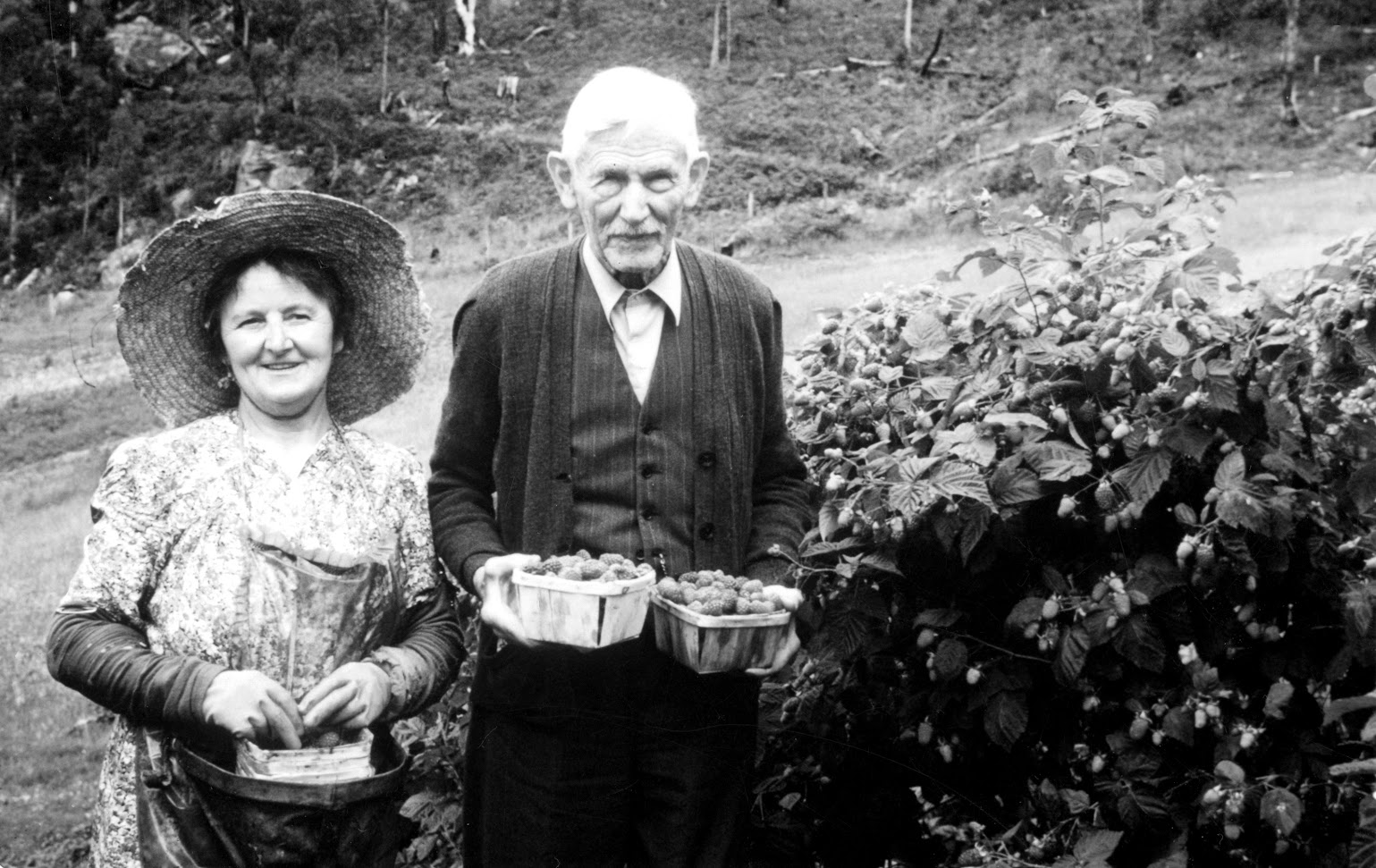
The Dural farm still stands, though much of the farm has been subdivided for housing. The old house has been gutted and is now used as a horse stable. When Uncle Arthur finally sold the farm, he moved to Merrylands, another suburb, where he lived until the ripe age of 96 years. Florence assured me his mind and his memory were well preserved until he died in his sleep. During earlier years he had kept in regular contact with family members in East Prussia and Berlin.
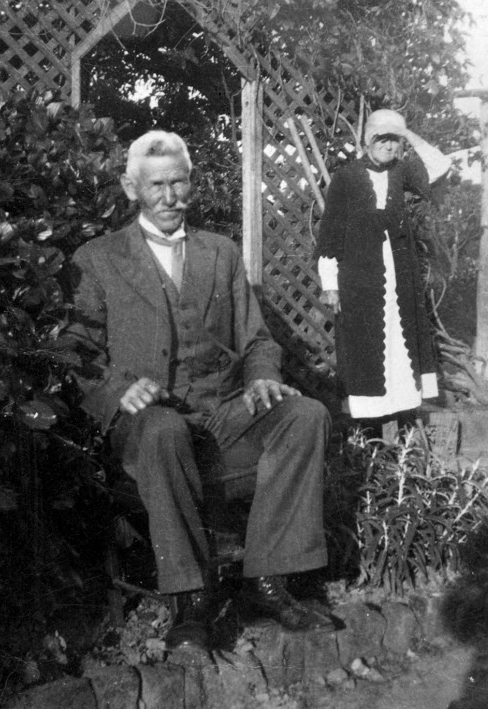
That record of his contacts with the family members in East Prussia tells us that from early childhood Gustav Adolph learned and spoke his family’s German language. He had started to learn English soon after arriving at Tasmania and attending school in Swansea. But for a long time all conversation in the family would have continued in their native German. Schoolboy Gustav could have learned enough written German to match his English. It enabled him to read German materials from Europe, and to maintain a letter exchange with his sister Louisa in Prussia, and also with her daughter Louisa Jr in Berlin. Florence reported that Arthur had collected a large number of letters and photos received from family members in Europe. But the whole lot, tragically, was destroyed in a house fire that destroyed the Merrylands house and all its content in a few minutes. So we have been left with the tedious task of reconstructing much of that Prussian history with the help of Louisa Jr’s son, my cousin and friend Wilhelm (Willi) Beutenmuller.
I have described the careers of Gustav Adolph’s two sons, Will and Reuben. But I must mention also the two daughters that were born in the United States. Grace grew to young adulthood in New Zealand, and eventually married a Mr Amyes, who later served as best man at the wedding of Ernest Brandstater and Martha Nillson. But this Amyes was unreliable, and fell in love with another woman. So Grace came to Sydney and lived with her parents in Dural. Grace still cared for Amyes, and Florence insisted she expected to be reunited with him. But that hope vanished when her man died unexpectedly.
Myrtle completed a nursing course, and she managed a nursing home in Wahroonga that was known as “Airlie”. She was a sweet, tender-mannered woman who always demonstrated much affection when she encountered me and saw in me the son of her cousin Roy. She married a Mr Damschke, about whom Florence had few compliments, citing some eccentricities that were never described. Myrtle had no children of her own, but took custody of two girls. One of them, Sue, came to be close and daughter-like to Florence.
We have come to the last years of Gustav Adolph Brandstater. He continued to live in his restored Merrylands house, and he remained alert, with active mind and memory until, at age 96 in 1959, he died in his sleep. He remained keenly interested in the affairs of Sydney Adventist Hospital, and also the missionary work done in Fiji and other Pacific islands by members of the Brandstater family. Quite late in life he did some ambitious traveling in the Pacific area, and we have a face photograph of him, retrieved from a discarded passport. Till the end he was a devout Adventist Christian, and was always a stalwart church man.
Louisa Brandstater Sr is little known or remembered by the Australian Brandstater family, and is commonly overlooked as a member of the First Family in East Prussia. She was born in 1862, the second child of Emanuel Sr and Wilhemine (Josties) Brandstater during their early years, living in or near Konigsberg. She was reported at first to be a normal active baby, but it was soon noticed she was not responding to sounds around her, and later tests confirmed that she was deaf.
Her deafness, without known cause, was a major issue when Emanuel Sr and his second wife Carolina prepared to migrate to Tasmania. Their ships’ passage was to be financed by travel assistance awarded by the colonial government in Hobart. But this daughter, handicapped by a hearing disability, was judged in Hobart to be unsuitable as an assisted immigrant. In response, the family bravely decided to stick with their emigration plans. Louisa could stay in East Prussia, living in a farmhouse with two Brandstater aunts, sisters of Emanuel Sr, in the village of Seehausen (“houses by the lake”), located in the farming estate called Gut Puspern. The family believed that once they were established in Tasmania, they could save enough money to pay for travel expenses, and bring Louisa to join the rest of them in Tasmania.
Louisa developed normally while living with her aunts. But though bright and active in most other respects, her hearing disability continued to overshadow her life. She continued to develop through an active childhood, but because she could not hear the spoken word around her she could not properly reproduce the German speech. She completed her school classwork and learned to get along using mainly sign language. She had many friends and became known everywhere by a nickname “Stummchen”, which means “Dear little deaf one”. Apparently she did achieve some verbal skills at school, which we know because in later years she maintained an active written correspondence in German with her brother Gustav Adolph, then in Australia.
After finishing school, now a bright, well developed and active teenage girl, Louisa was judged capable of significant work in the estate. She was made responsible for the upkeep, repair and laundering of all the linens in the manor house. She performed this work well, with a pleasing, intelligent demeanor, and she caught the admiring attention of the lord-owner of the estate, Fritz Kaswurm. He was attracted to her, and in time she became pregnant, and gave birth to a healthy daughter whom she named Louisa Brandstadter, identical to her own name.
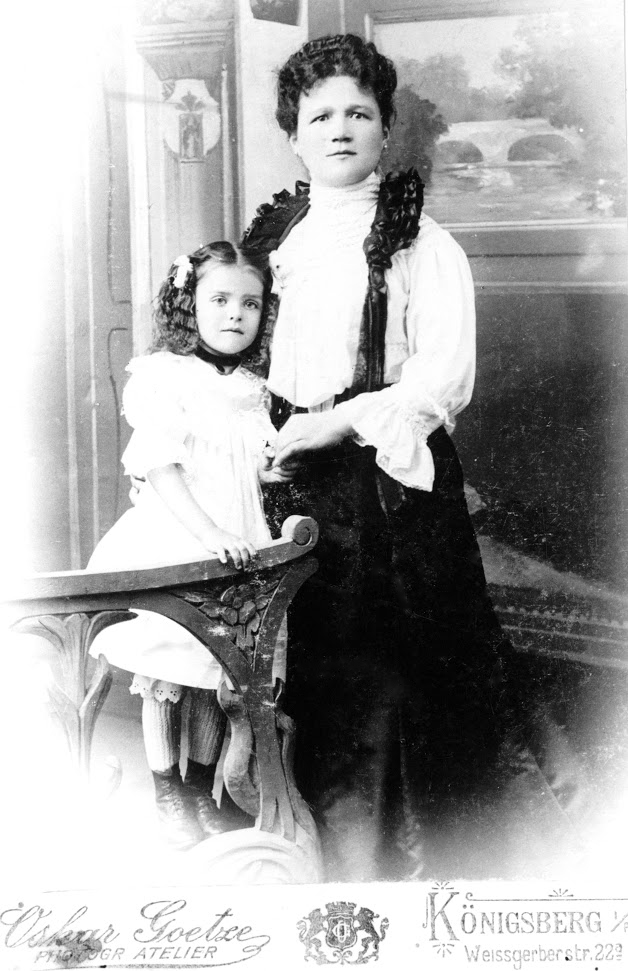
This baby was accepted as the master’s child, and was widely admired and loved in the estate. Louisa Jr grew as a normal active child and attended early school in the village of Ipatlauken, where the students included other children of Fritz Kaswurm. After advancing into young womanhood at the end of schooling in Puspern, Louisa Jr was sent for higher cultural exposure and education in an elite girl’s school in Berlin, at a time when her contemporary cousins such as Ida and Louisa, born in Tasmania, and daughters of Emanuel Jr, were attending college in Australia.
Louisa Jr was an attractive young woman in Berlin where she met Wilhelm Beutenmuller, and the two were married and established a home in Berlin. They produced a family that included a son Willi who is described elsewhere in this family website. Willi immigrated to California and the Brandstater relatives, both in Australia and California, were able to keep in contact with the Beutenmullers back in Germany, including my parents, Roy and Frances, who had a memorable visit with them during a visit to Berlin in the 1960s. Later I myself met the Beutenmullers when my family and I arrived as new immigrants to California in 1969. I was pleased to become acquainted with Willi Beutenmuller, his wife Gerda and their son Bernd. Willi was the son of our celebrated Louisa Jr in Berlin, and he had migrated to America with his family shortly after World War II. Willi and I had fun getting acquainted. I learned that in 1938, when he was a teenager, he was sent back to Puspern by his mother. Her purpose was to let Willi get to know her family relations and friends back there, and become familiar with the grand estate of Gut Puspern. It was that visit that made Will familiar with the whole property and local landmarks, which he was able to point out to me when he and I together visited Puspern. Willi became a close friend, and it is from him that we have been able to learn about much of the early East Prussian history of the Brandstater family. A more extended story of Willi Beutenmuller’s life will appear elsewhere on this website.
Stummchen, Louisa Sr, remained employed at Gut Puspern after her daughter had moved to Berlin. Later Louisa Jr learned that her mother had subsequently borne a second daughter, and by the same father, Fritz Kaswurm. This sister came to Berlin in mature adulthood and visited her older sister, our Louisa Jr. We have a photo of the two sisters, given to Wilhelm by one of his sisters. But they never learned the sister’s name, nor the name that Stummchen acquired when she married into a fine Prussian family. This sister promised Louisa Jr that she would return to visit, but she never did. They learned from some source that she had died of cancer.
During her years in Puspern, Louisa Sr joined the household of the Bakshcat family, and she became the house-mother in charge of six children of the Bakschats. Onkel Wilhelm Bakschat was the hofkamerer, the work manager, of the whole 50,000 acre estate of Gut Puspern. The Bakschat children were a lively crowd, and one of the children, named Emma, assured us later that Stummchen was a cheerful but stern disciplinarian, who effectively managed the children under her care. At a later time, after Louisa’s death, the teenage Wilhelm Beutenmuller (Willi) from Berlin spent several weeks visiting Puspern, and during that time he lived with the Bakschat family who remembered tenderly their earlier years with Willi’s grandmother. They all understood that he was the grandson of their beloved Stummchen.
Willi got to know the Bakschat children well, and personally became attached to teenage Emma, mentioned here because Willi and I, together, were fortunate to visit Emma, by now in her eighties and living with her retired professor husband in the Austrian town Miesbach, situated between Vienna and Salzburg. She had a very sharp memory, and in my presence, arguing vigorously with Willi, was able to verify all that Willi told me about the relationships between the Brandstaters and the Kaswurm, and also the news of the final death of Stummchen, Willi’s grandmother. It may have been from Emma that I heard that our Louisa Sr was interred in the city of Eylau. This information was confirmed to me quite independently by my Los Angeles cousin Kenneth Brandstater. This report seems likely because we now have a photograph of Louisa Sr’s grave. Its marble headstone carries an endearing farewell to “Louisa Brandstadter”, and it is inscribed “to our beloved mother”, by the two sisters who met in Berlin.
At some point during this period, Louisa Sr received money from two Brandstater brothers in Australia, Gustav Adolph and Herman. With this help she was able to fulfill her dream of joining the rest of her Brandstater family in faraway Tasmania. But in the village of Bismarck, it was not easy for her to adjust to the humble standards of life in a Tasmanian farmhouse. Her deafness remained a handicap, and although her family knew the German language, they did not easily adjust to her sign language and her difficult pronunciation of some German words. Also, the familiar friends she had known all her life were back in Gut Puspern, and making new friends in English Tasmania was slow and difficult. The family reunion turned out to be less fulfilling than she and the family had hoped. So eventually they cut their losses, and Louisa returned to the land and the people she knew and trusted in East Prussia. She could keep in touch with her Tasmanian family with her letter written in German.
One episode remains to be mentioned. It was Louisa’s assignment to live her retirement years in an institution for disabled persons in the Prussian city of Angeborg. Many years later, in 1987, the writer of this life-story, Bernard Brandstater, visited this very institution, which had become a special hated landmark within the family. At this visit I was accompanied by Louisa’s grandson, Wilhelm (Willi) Beutenmuller, the son of Louisa Jr. The old buildings, still functioning in their historic role as a refuge for elderly disabled persons, is located in a Polish city of different name.
When we visited, it did appear to be a dreary, unwelcoming place. We know that Louisa was unhappy there. From his childhood in Berlin, Willi had been told by his mother, Louisa Jr, about this sad experience of his dear aging grandmother, how she had been miserable there, and had begged, weeping, to return to Puspern. Finally she won help from her old friends back there, some of them now having moved to a town called Eylau. She was thankfully accepted back to live out her life in familiar surroundings amongst people who knew and loved her.
Louisa Sr died in 1937, though the circumstances of her passing are unknown to us. She is interred in a majestic grave in the town originally known as Eylau in East Prussia. We have a good photo of her grave, which is inscribed with her name, and it is given by “our dear mother”, presumably by those two sisters who met in Berlin. Today we have no knowledge of the grave’s location, probably somewhere in northern Poland.
Louisa was the engaging woman of character, the great-aunt I wish I had once known.
The author, Bernard Brandstater, is the grandson of Louisa’s brother, Emanuel Jr. He was assisted by Wilhelm Beutenmuller, Louisa’s grandson.
This history of the Brandstater family can be titled after a famous hero of Ancient Greece, Odysseus. He was a military leader who fought in the siege of Troy. And when that was done, he took ship for home with a band of brave warriors who trusted him. They wandered for years around the Mare Magnum, the Great Sea, enduring legendary adventures from hostile men and angry gods. The survivors at last reached their island home, Ithaca, and Odysseus was restored to his throne as King and to his queen.
The Brandstater story is like that. Our ancestors endured hardships and trials for centuries. They resisted persecution in their home country of Salzburg, and they lost their possessions and were expelled in the 1730s. They built a new life for themselves in East Prussia. But after many years these Germanic surroundings also changed in unhappy ways. There were many families named Brandstater among the Salzburgers and one of these, a family of six, decided they must make another new start somewhere else. Two young parents plus four children sailed out of Hamburg in 1871, and crossed vast oceans to the distant, primitive island of Tasmania. This was no civilized kingdom, ready to welcome them, and their future depended on the initiative, hard work and family commitment of a capable farmer-carpenter, husband and father named Emanuel.
Here, in this website, we are telling the story of how this Emanuel and his family, and the children’s children after them, built new careers and a new future for themselves and their descendants. Here is the story of the beginnings of the Brandstater family in Australia and its continuing expansion.
Expelled from Salzburg
The first Brandstater ancestors we know lived and farmed in the mountains and valleys around the cities of Salzburg and St. Johann. They were herdsmen and crop-growers. Many of them were refugees from elsewhere. In the 1600s and the early 1700s, the deplorable and appalling wars of religion that had long troubled Europe had led many persecuted peasant families to seek more hospitable places to live in, like Salzburg. They included numbers of devout Protestants, including some Brandstaters, who earned a living in the farmlands around the city. Some were Hugenots, religious refugees from France, and others had crossed the mountains from Italy, and who have been linked by historians to the Waldenses, victims of persecution from Savoy and Rome.
This peaceful-looking scene was disrupted in 1731-32 by Salzburg’s Archbishop Leopold Fermian. He admired the French king’s revocation of the Edict of Nantes in 1685. This removed the royal protection that had sheltered French Protestant Huguenots, and many of them were thereafter compelled to leave France. In Salzburg the Archbishop decided he also should rid his territory of these Protestants whom he labeled troublesome heretics. So by edicts announced in 1731 and 1732, all Protestants, often referred to as Lutherans, were required to leave all their possessions and migrate to some other country. There was no massacre. But the expelled community that included many families named Brandstater, were forced to tramp with their children up the northern road that took them into friendly Protestant territory. All told 30,000 Protestants left the Salzburg area, and of these 20,000 accepted an invitation from King Friedrich Wilhelm in Potsdam to emigrate as a group and settle in his East-Prussian territory, in and around the city of Gumbinnen.
East Prussia
What kind of country was the new homeland that welcomed our dispossessed ancestors? East Prussia of that era was no backward, neglected corner of Greater Prussia. Known in all of Europe by its German name Ost-Preussen, it had a prosperous capital port city in Konigsberg, whose ships had easy and direct access to the Baltic Sea by a canal. Konigsberg boasted a magnificent royal castle, and the Protestant cathedral matched the finest in Europe.
The citizenry of East Prussia were a mixture, brought together by the ebb and flow of battles fought by leaders of Sweden, Finland, Russia, and Germany. Even distant France had great influence, thanks to Peter the Great, who embraced French tastes in art, in sculpture, in dress, in domestic decor and in architecture.
In that mix of peoples, religion was an important identifier, with Protestant Christianity being most dominant. However by the late 19th century Protestant worship had already split into several different streams, each with its own particular emphasis. Germanic Christians were divided into groups of Calvinist persuasion, and there was another group that was committed to the Arminian emphasis on free will and individual responsibility. Deep personal spirituality was emphasized by Moravian Christians from Herrnhut, who had had great influence on the Wesley brothers, John and Charles, in their founding of the Methodist movement in the U.K. and the United States. There were many believers who had come from Anabaptist background, and these families were pacifists. They were not comfortable with the increasingly militaristic policies of the Prussian political leaders, who were willing to use brute force to achieve their ends. These Christians did not want to see their sons marching off to war.
Another feature of note in early East Prussia was education. The University in Konigsberg had a diverse and disciplined faculty whose reputation was buttressed for years by the long tenure of Immanuel Kant as professor of philosophy. His book “A Critique of Pure Reason” was a landmark work, still widely quoted today. Preparing competent students to attend these demanding fields of study were strict schools in sizable towns, teaching serious classics at respectable gymnasium level.
The territory of East Prussia was an exceptional destination for our expelled Salzburger ancestors. Fifteen years before, that territory had been hit by a devastating epidemic of plague. In some of the farming areas the working population had been almost decimated, with many farms and even villages left empty, with insufficient workers to care for animals and produce its crops. To the Prussian King in Potsdam in the 1730s, the recently homeless Salzburgers were a godsend. These families responded gratefully, and moved right into the empty farmlands, especially around Gumbinnen.
The terrain itself was friendly for farming. The crop country around Puspern, when our forebears cultivated the fields there, must have been very similar to what Willi Beutenmuller and I saw when we first drove a rented car through communist territory in old East Prussia, now part of Poland, in 1989. I had been expecting to see a cold uninviting northern land, rather dull, with not much contented citizenry. But it was not like that. The farm country looked good: crops of oats and wheat, a full meter high in many places, and sure to yield a bounty of grain. I was especially impressed by the well maintained country highways, often running straight and smooth and flat for miles. They were the still-surviving autobahns of the booming German years of the thirties, often bordered on both sides by unending rows of mature beech trees. Many townships we passed through had suffered badly during World War 2, but those well-made roads and those splendid trees survived. In good times, this country could be very productive.
In the 1730s, the newly arriving Salzburgers had been assigned to vacant farms and villages, and they quickly did the necessary work of restoring the houses and land for active occupancy. The Salzburgers established a community with neighbors having a common history, a similar faith, and a shared determination to flourish in this new country. Sharing many features of religious faith, in the city of Gumbinnen they built a special church for themselves, to suit the specifications and worship practices of their fellow-believers. That humble original church became neglected and dilapidated when the German residents moved out and Russians moved in during the war years. When Willi and I were there initially it was in needof rehabilitation, but when I visited Gumbinnen again some years later, the church had been restored after permission had been given by the Russian government.It had undergone restoration and was looking good, with fine stained glass windows.
Why did the family leave?
Emanuel and his wife Carolina were not good letter-writers. They left us no clear account of the unpromising future for small farmers that made their family’s prospects in East Prussia look bleak. Later from Australia they may have sent reports to relatives back in East Prussia. But they kept no diaries for us to read, and no messages to help us connect with them. So we have to surmise from history for the reasons that led to their discontent and their urgent desire for emigrating to somewhere else.
In the 1870s economic pressures loomed large. There was a high economic and cultural value set on large families. But small landholdings were not large enough to support a large family and the farm would normally be handed down to the oldest son leaving other sons to fend for themselves. The First Family of Brandstater with Emanuel at its head, included three young boys, and Emanuel wanted to give all his children a good start in life. Also, the industrial revolution that supported the working class in Britain was late getting started in Prussia. Good jobs to support a family were too few in the cities, even in port cities like Konigsberg. There were not enough factories.
An alternative career for able-bodied young men was in the military. But enrollment in the army was undesirable, especially because of the brutal, life-threatening, hand-to-hand bayonet fighting that was the norm in Europe at that time. Furthermore, many Salzburgers had deep religious antipathy towards war and bloodshed. Anabaptists and Moravians had strong pacifist convictions. The Prussian army was well trained and disciplined, as demonstrated in 1871 by their victory in the Franco-Prussian War. But still there was tragic loss of many young Prussian soldiers. And Emanuel and Carolina may have had deep objections against seeing their sons march off to fight in other men’s dangerous wars.
In 1871 a further source of uncertainty for the Brandstaters was the rivalry, sometimes bitter, that had arisen between different communities of Christian devotees. Those serious believers held passionately to their convictions. And if you happened to express forceful theological views that were opposed to those of the rulers in your area, you could easily suffer for your beliefs. Sharp differences could lead to poor court judgments; time in prison was a possible penalty. The European Wars of Religion left behind hostilities that took decades to subside. We don’t know what convictions motivated Emanuel as a young man in East Prussia, but he did demonstrate devout involvement later in the religious life in their Tasmanian village of Bismarck.
Putting these factors together, Emanuel and Carolina became convinced that life for them and their children in East Prussia was not going to be as rosy as they had hoped. They heard reports coming from thousands of Europeans who had emigrated to Canada, the United States, Brazil or Argentina. And they wondered how they might be able to arrange their affairs, take leave of close family and friends, and undertake the exciting but risky and life-changing move to a wholly different culture. Hopefully it might lead to a new, fulfilling life for the whole family. A big obstacle for them would be the need for money to pay the costs of international travel. They would also need sufficient cash to survive for a time until they were settled in their new home and had found ways to earn income and support themselves.
Voyage to Tasmania
An answer to these financial quandaries came from an unexpected source: an official offer of assisted ship’s passage to a place about which they had known little. The offer came from a British Colony in far-away Tasmania, a large island south of the mainland of a continent named Terra Australis that is now called Australia. The government in the capital city, Hobart, under the rule of Queen Victoria and her governors, was in need of skilled workmen to do the rugged work of constructing roads and bridges and building houses and other structures in the towns and cities. Tasmania especially needed the skills of experienced farmers, who knew animal husbandry, could clear land of its forests, and establish farms for grain and vegetable production.
The announcement that came to the attention of Emanuel and Carolina described the terms of engagement. For an assisted passage it offered preference to experienced “German small farmers,” and that was a credential that Emanuel could satisfy easily. Our Brandstater ancestors must have discussed it thoroughly, and learned what they could about Tasmania, its climate, and its suitability for successful farming. We don’t know whether this offer was publicized by a newspaper, by notice posted in a public building, or even by announcement at church. But Emanuel decided this offer was very suitable for him and his family.
He was interviewed, probably in Konigsberg, a long trip from Benkheim, by a representative of the Tasmanian government. He was a German-speaking Tasmanian named Frederick Buck, who had been given the temporary title of Tasmanian consul. And all seemed favorable except for one detail: all family members had to have good physical health. Emanuel had to report that their daughter, Louisa aged eight, had a hearing disability, a fairly advanced level of deafness. By standards set in Hobart, that made her unacceptable as a recipient of an assisted ship’s passage.
What to do? After agonizing debate, a solution was found. The two parents, Emanuel and Carolina, plus the four remaining children (Emanuel Jr, Gustav Adolph, Carolina Jr, and a new baby, Herman) would accept the assisted passage, all the way from Hamburg to Hobart. And young Louisa could stay behind in the care of two aunts, sisters of Emanuel, who knew the child well and could be trusted to take good care of her. The sisters lived together in a small village called Seehausen, located within the large Puspern property and next to a small lake. A nearby village called Ipatlauken included a school which was suitable for Louisa. And her parents were confident that, once settled in Tasmania, they could earn some money and pay the travel expenses to bring Louisa out to join the rest of her family.
That custody arrangement with the sisters was not ideal, but it was seen as only temporary, and Emanuel set about all the other arrangements that had to be completed before the next passenger ship that would sail to Hobart. Family and friends, especially those in Benkheim where Carolina’s Lange family were living, had to be drawn into this major family separation. Some possessions were sold, yielding travel cash, and other household stuff was left with the Langes. When the departure date was near, we can assume they had a farewell party of sorts. Shedding many tears, the family members did not know if they would ever see each other again. So Emanuel and his family started their journey to the Port of Hamburg. We don’t know whether they traveled by highway coach, or whether by this date in 1871 the European network of railroads had reached Konigsberg.
Another travel option might have been a coastal ferry by sea from Konigsberg to Danzig or Lubeck, and the rest of the way by overland travel. They had to reach their port of embarkation in time to board ship before the set departure date. Their ship, the SS Eugenie, was a pure sailing ship, so they were dependent on changeable weather and wind conditions to give them good sailing down the Elbe River to the Atlantic. In case of delays, passengers would have to spend some of their savings in the riverside lodging houses, built expressly to accommodate the large numbers of departing emigrants (called “auswanderers” in German) that said farewell to Europe every day. The wharves were often crowded. During decades, Hamburg was the principal port of departure for millions of exiting Europeans.
Caring for departing passengers became a major industry at the Port of Hamburg. Precise records of every single departing passenger were kept in an Embarkation Book, and all the books for year after year were protected and closely guarded, kept safe in a historic Embarkation Museum in Hamburg. Willi Beutenmuller and I were able to visit this museum during our visit to Hamburg in 1989. And we inspected the exact 1871 book in which were listed the names of all six members of the Brandstater family, including the babe-in-arms Herman, who sailed from Hamburg on the ship SS Eugenie. We gazed for a long time at that historic page. In German longhand writing it was easy to read the names of all six members of the family, their surname being spelled in the original way, Brandstaedter. All their ages were given, and also Emanuel’s occupation, which was recorded as “farmer and carpenter”.
It was in that Embarkation Book that we learned, for the first time, where, in all of East Prussia, our ancestor family had been living at the time of their departure. This was their place of origin, the town of Benkheim in the heart of East Prussia. That was an important place in family history, and both Willi and I independently came to the same conviction. If it’s at all possible, we must visit what remains of Benkheim, to see where the Brandstaters had lived, and inspect the local church where they might have worshiped. We might even discover some remnants of the family history.
Now we must tell what kind of ship the family sailed on, and about the conditions on board. The Eugenie, built in Hamburg shipyards in 1865, was a steel-hulled vessel, rigged as a brigantine, with tall masts and big square sails. Without supporting steam engine power, the sailing times were determined by prevailing winds. The crew were European, and the skipper was Captain Voss. The embarking passengers numbered about 250, though about a hundred of them disembarked at an unnamed destination in Brazil, leaving a lighter crowd, about 170, to share facilities for the rest of their voyage to Hobart.

On board the conditions were elementary and primitive. There was little privacy between families, just many narrow bunks crowded together. Bathroom facilities were pathetic. There was water for bathing, but bathroom relief was usually achieved by visiting a bench that hung over the stern of the ship. This was no pleasure cruise. Little space was provided for just sitting and socializing. And the food offered by the cook at mealtimes was basic meat-and-potatoes stuff, with little fresh vegetables. There were not enough dining tables for all passengers. So much of the mixing and eating and fraternizing took place in the below-deck sleeping spaces, sitting on adjacent beds. These crowded, uncomfortable conditions led to sickness amongst the passengers, and the lack of fresh vegetables and fruit resulted in several cases of scurvy during the five-months at sea. During the voyage there were four deaths amongst passengers; the cause for any of them was not recorded. And there was one, normal, vigorous childbirth in mid-ocean.
The ship’s ports of call were an unnamed port on the Brazilian coast, followed by a bearing southeast across the south Atlantic, with an assumed call at Capetown for fresh water and food supplies. After rounding the Cape of Good Hope, all Australia-bound ships sailed due east at a latitude in the famous Roaring Forties. That was about 45 degrees south, where the trade winds blew unceasingly, often at close to gale force. The ocean waves were mountainous, towering over the ship when it was deep in a trough between crests. It was exciting and rough sailing, but with those strong westerly winds daily distances gained were large, every day taking them nearer to Hobart.
Hobart at last
At last the Port of Hobart came into view. The date was in 1872. What a welcoming sight, with a large, quiet, sheltered bay, and behind it lofty Mount Wellington serving as a backdrop! We can only imagine what were the thoughts of Emanuel and Carolina as they saw at last the terrain that was to be a future home for them and their children. It was so different from the flat, farming country they had known in East Prussia. But this was their future home, and it was here that their new lives would unfold.
The arrival of the immigrant ship the SS Eugenie was a significant event in Hobart, reported prominently in the city’s newspaper. But surprisingly there was no rush for the passengers to disembark. The identity of all arriving newcomers had first to be verified, and likewise their state of health. The Brandstaters were interviewed and their names duly listed in the port Landing Book, their names recorded in the Anglicized version, Brandstater, which we have used ever since. At last they were recognized as approved residents of the British Crown Colony of Tasmania.
But newspaper stories reported that the passengers remained together on board the ship for two more weeks, refusing to leave the ship until port authorities agreed to conduct a hearing at which they could voice their complaints about conditions on ship. During the voyage the food supplied was unsatisfactory for long months at sea. In one report we have seen reference to complaints about the behavior of Frederick Buck, the man who had recruited them, and who accompanied them on the voyage. This was a part of our ancestors’ adventure, and we had hoped to share here some details from a printed report of that hearing. But our searching, even with help from port authorities, failed to uncover any official report. What did emerge was a well composed letter written by passengers and signed by many of them, expressing sincere thankfulness to Frederick Buck for his help and his care for them during the voyage.
Employment at Cambria in Swansea
At last the passengers did come ashore, and were housed briefly in a harbor-side building. Some of them were welcomed and offered housing and work by relatives and friends from the Old Country. But the Brandstaters, and many others, remained at the port, available for employment. A newspaper announcement was published that gave a list of all the named immigrants, including Emanuel Brandstater, who were seeking jobs and housing. But his name was missing from a second notice posted soon after, indicating that he had obtained employment. In the official record, easily read today in the port’s Landing Book, there was a notice that told that immigrant Emanuel Brandstater had been employed by John Meredith, the proprietor-owner of a large farming estate at the town of Swansea on the east coast of Tasmania. His terms were to work as a farm hand, with undefined duties. He and his family would be given housing and food on the property, plus twenty guineas a year. That meant twenty golden sovereigns, each carrying the Queen’s profile.
In 1872 Tasmanian Swansea was a town in the making. Its name is familiar to anyone from Wales, where today stands a large city with the same name on the Welsh south coast. The range of mountains, which is the north-south topographical backbone of Wales, is called the Cambrian Mountains, and the Meredith farming estate was given the name Cambria, which it still has. The early Meredith family likely had robust Welsh connections. Their estate was a grazing property of about 15,000 acres, populated by thousands of sheep. Caring for this huge flock, protecting them from parasites by drenching, and helping with the big job at shearing time, provided plenty of work for a resourceful man like Emanuel. Even as early as 1872, fine wool from healthy sheep in the colonies was a valued commodity for the weavers of worsted cloth in Yorkshire’s Leeds and Huddersfield.
The two Brandstater sons, Emanuel Jr (10 years) and Gustav Adolph (six years) were too young for heavy work, but were at the right age, by English schooling tradition, to attend the Swansea public school. It was located an easy walk from the family’s housing at the farm. The boys were kept busy, learning new English words every day, confirming the German alphabet they had learned in East Prussia, and catching on to the rough and tumble of Australian kids in the playground.
The move to Sorrell Creek (later Bismarck)
Though Emanuel’s original contract was for two years of employment at Merideth’s sheep grazing estate Cambria, in Swansea, they may have stayed longer than that. They eventually made arrangements to settle closer to Hobart in a recently opened settlement called Sorrell Creek. This was about twelve miles from Hobart, inland from Glenorchy, a northern suburb of Hobart. The settlement was reached by a mountain road that led up and over a long steep hill, and was named Sorrell after an early Tasmanian governor. The family must have travelled from Swansea the same way as they came, by coastal ship, because there was not yet a navigable overland highway to Hobart.
Emanuel and Carolina were attracted to Sorrell Creek because that valley was suitable for timber milling and for farming in a well-watered valley. Sorrell Creek was an important destination for them because a a rather large number of European immigrants had already settled there. These included some German families they knew well from their shared voyage on the ship Eugenie, and from an earlier immigrant vessel the Victoria that had also brought German settlers and some Danish immigrants from northern Europe. The Brandstater family promptly settled on a 37 acre parcel of land that Emanuel had acquired from government authorities. Word-of-mouth anecdotes tell that while they were building a house on the property the family sheltered in some kind of temporary tent erected against a large hollow tree log.
When Emanuel had secured some employment for himself, and he had started the beginnings of a mixed farm, he built a complete homestead for his growing family. And that homestead remained the Brandstater House, and it still stands today. It was last occupied, as far as we have learned, by the Fehlberg family. A younger member, Don Fehlberg, has related to me that he had lived there with other family members in the 1920s or 1930s. In late 2017 I paid my respects to history by visiting the Brandstater House, now deserted and slowly decaying, with some kitchen windows broken. But inside it was dry, and had some surviving wallpaper. The corrugated iron roof seems to be intact, and the timber frame of the house seems to be strong and straight. I even crawled underneath and confirmed that the supporting stonework had held up well, despite the passing of 140 years. The whole property could be restored and made habitable, by anyone who felt inclined to invest in it some money and lots of love.
The one feature of this Brandstater country house that I missed on this last visit was the outback toilet, referred to as a dunny, which is a widely reverenced symbol of life in the Australian bush. On a previous visit in 1989 I had admired this traditional outback toilet. It was not painted, and was constructed of split gumtree wood, greyed from many years of exposure to the elements. To complete the picture, it was inhabited by the traditional redback spiders. But in the intervening years that historic edifice had been taken down, and nothing of it now remains.
Getting established in Sorrell Creek-Bismarck
It is necessary now to include here a summary of the fortunes of that First Family. Emanuel Sr, the patriarchal immigrant who was, with his family, the initial Brandstater pioneer in Australia. He made good use of his German training in carpentry and construction. In 1876 he was awarded a contract to construct a public school building and an adjacent schoolhouse on the main road leading into the village of Sorrell Creek. By that year the large number of German settlers in the valley wanted to give special honor to their Fatherland hero, Otto von Bismarck. So they officially named their farming township Bismarck. The town name of Bismarck remained until World War One made German names became unpopular in English Australia, and after receiving a community petition, authorities in Hobart changed the name to Collinsvale. The original school that great-grandfather Emanuel had built in 1876 was much later badly damaged by a bushfire. But it was rebuilt in enlarged shape, long after the series of young Brandstater kids had received their basic education within the original walls.
In order to understand what life was like in Bismarck in the early years, we urge that you to read the memoirs of my father Roy Brandstater who was born in northern Tasmania (Melrose) in 1898, but spent most of his childhood in Bismarck where he received his elementary education. He speaks of Collinsvale, as do many others, as a hard-working community of good neighbors. In his Memoir Roy gives special description of the annual community picnic which was a gala affair, with plenty of sporty competition, stacks of food, and music to suit any taste. For some years, Bismarck fielded a local brass band in which both Gordon and Roy played instruments. The annual picnic was always held, according to his record, on Stellmacher’s farm.
The economy of Bismarck depended on two main industries: timber milling and farming. Timber milling was a natural industry because there was an abundance of large-trunked eucalypt trees, of which several varieties flourished in the climate of Bismarck. Furthermore, that forest of sturdy trees had to be cut and the stumps removed before the land could be used for growing edible crops. All the Bismarck men became excellent woodsmen, expert with saw and axe. My father Roy, as late as his mid-seventies, could still demonstrate remarkable skill with an axe. He could look at a log, judge how to attack it, and cut it through quickly with a clean scarf, like any champion woodsman.
Farming was the other important industry. In Collinsvale it mostly consisted of small mixed farms, with an emphasis on growing fruit crops: apples, gooseberries and raspberries, along with vegetables. Much of the land was sloping down into a narrow valley, and those mixed farms could prosper only with lots of hard, hands-on work.
What about church and religious life?
One feature of life in Bismarck was the emphasis on disciplined, devout behavior, appropriate for upright European citizens. Almost all of the settlers were Protestants, identifying with a connection to some version of the Lutheran church, or similar denomination. But there was no local pastor to lead them in weekly church services or worship. There was only a small chapel that was sometimes used for Methodist worship.
In 1880s a change occurred in the religious life of the community. The village leaders chose to invite some international Christian preachers to take a break from Hobart and visit Bismarck. There were several persons in this visiting party, including men named Haskell and Israels. These men were robust, conservative, Bible-quoting preachers from California, and identified themselves as Seventh-day Adventists. They preached emphatically and with persuasive sincerity. They preached with particular emphasis on the Fourth Commandment that required observing Saturday, the Jewish Sabbath, as the day for rest and for worship. The village audience was convinced that the Bible did indeed urge the sacredness of the Sabbath, and almost all decided: If that’s what the Bible says, let’s do it.
The small Methodist chapel was not offered to these new converts for worship. The men in the village, including Emanuel Brandstater and his family, quickly decided they should build a church for their own use. One of the settlers, August Darko and his wife Henriette, offered to donate a fine block of land on a central location on the corner of Church Street and the Main Road. That offer was gratefully accepted by the community, and a willing team of men set to work. With expert guidance from Emanuel Brandstater, who had demonstrated his competence by building the public school, a fine church building took shape. Emanuel was helped by willing volunteers who included his sons Emanuel Jr, Gustav Adolph, and Charles Albert. The simple but triumphant church building was finally dedicated and used for worship in August, 1889. Virtually all of the growing Brandstater family residing in Bismarck worshipped in that church week by week. Father Roy told me that his earliest childhood memories were of himself, as a toddler, sitting on a front pew and dangling his little legs, while learning the simple hymns of the day. Music, much of it sacred, became a major element in the cultural life of Bismarck.
Emanuel continued to care for his mixed farm the rest of his life, eventually retiring with his wife Carolina and spinster daughter Carolina to a colonial house on the Main Road in Glenorchy. While living there, Emanuel died in 1911, aged 78.
R.I.P Emanuel Brandstater
Emanuel’s children lived after him and here we can summarize their names and their life course:
- Emanuel Jr, oldest son, at age 22 married Wilhemine Darko, age 25, and produced eight children, of whom seven reached adulthood. They were: Ernest, Annie, Louisa, Lydia, Ida, Gordon, Roy. Ernest led the way. Annie was a favorite, but unfortunately died in a traffic accident in Glenorchy, before her planned wedding. Louisa worked with Uncle Gustav Adolph, married William Smith and served many years as pioneer missionaries in Pacific Islands. They had two sons Ivan and Milton. Lydia remained in Tasmania, married farmer Fred Peterson, and had no children. Ida was the youngest daughter and found domestic employment in Glen Huon, married Herb Brown, had three children Ron, Stan, Yvonne. Gordon as a teenager, sought more education at Avondale College, became an Adventist minister, married Idarene Felsch. He had three children: Russell, Marjorie, Beryl (Betty) and was church leader in Pacific islands and in Australia for many years. Roy followed Gordon to Avondale, became an Adventist minister, evangelist and church builder. He married Frances Eastwood, had four children: Rhona, Bernard, Murray, Lynette.
- Louisa: was second child, had hearing disability, remained with relatives in East Prussia. She had two daughters, Louisa Jr. and a second name not known.
- Gustav Adolph: following advice from Ellen White, he studied at Battle Creek College, graduated in nursing and subsequently managed the Adventist Sanitarium in Christchurch. He later worked in Sydney and Warburton. Married Florence Grattidge and they had four children: Grace, Myrtle, William and Reuben.
- Carolina: daughter, never married.
- Herman: became a farmer in Bismarck, later a house builder in NSW. Married Minnie Hughes: two sons Reg and Cecil. Fondly remembered.
- Charles Albert: known as Albert in Australia, as Charles in California. Studied in Battle Creek. Married Margaret Kessler. Lived most of his life in Los Angeles and worked as a practicing dentist. He had three sons: Oliver, Glenn, Kenneth, all dentists.
- Fritz: A loner farmer and musician. He lived life in Tasmania and never married.
- Charlie: Became credentialed house builder and contractor; worked in Tasmania and Geelong, later NSW. Married a Smith daughter. Had two daughters: Beryl and Thelma.
The earliest references to the Brandstater name are found in records of families living in the Salzburg area in the early 18th century. There are up to 30 variations of the spelling of the name, including Brandstäter, Brandstaedter, Brandstatter and Brandstadter. These families were members of a large population of Protestants living outside the city of Salzburg, working as laborers in the Hallein salt mines near Salzburg that were an important part of the local economy, or on farms in the Alpine valleys around Salzburg.
In the early 18th century Salzburg was not part of Austria but was an important sovereign ecclesiastical state within the Holy Roman Empire and was governed by an archbishop. The population of the city was entirely Roman Catholic, in contrast to the predominantly Protestant inhabitants in the surrounding area. Initially both Catholic and Protestant workers had been brought to Salzburg to work in the salt mines, and over time these were joined by Protestant refugees from northern Italy and France, the Waldenses and Hugenots. But over the 200 years since Martin Luther had initiated the protestant reformation, the families living in the surrounding area had increasingly become Lutheran Protestants through the influence of the refugees, contacts with preachers in Germany and by reading pamphlets and books.
There was constant tension between the Catholic authorities in Salzburg and the rural Protestants who were labeled as heretics and were severely restricted and persecuted. The aggressive intimidation of Protestants included banning of public meetings, house searches, burning of books and arrests. Many families during the late 17th century had been forced to leave their homes and emigrate to other countries. These conflicts were set against a background of recent European history that included major religious wars, the Wars of Religion in France (1562-1598) in which 3 million lives were lost, the Thirty Years War (1618-1648) when an estimated 6 to 8 million perished and the persecution and expulsion of the Waldenses in 1655.
In 1685 Louis IV in France revoked the edict of Nantes, ending a 90-year period of relative religious tolerance in France, during which Huguenots had been free to worship without intimidation. After the edit of Nantes was revoked there was a revival of suppression of Protestants by Catholic authorities in France and elsewhere in Europe. The Archbishop in Salzburg was impressed with the successes of Protestant suppression and decided to remove all the Protestants from his state.
The Edict of Expulsion
On October 31, 1731 the Archbishop of Salzburg, Leopold von Fermian issued an edict, the Edict of Expulsion that required all Protestants to recant their non-catholic beliefs or be banished from the state. The Archbishop set a date whereby all Protestants had to leave the archbishopric, and emigrate to another country, leaving their farms, houses and all their possessions that they could not carry with them. Those without farms or property were given 8 days to leave; tradesmen and those with property or farms had up to 3 months to leave, allowing time to try to sell all their goods. However with so many houses, farms, cattle and sheep suddenly dumped onto the market, most Salzburgers were unable to sell or if they did sell received very little money for their possessions. Many farms and possessions were eventually confiscated by the Archbishop. One heart-wrenching rule in the Edict of Expulsion stated that children under 12 could not leave with their parents but had to remain in Salzburg where they were to be given to families in the city to be raised as Catholics. Despite that rule, many families did manage to take their children with them.
Beginning in November 1731 there was an immediate and abrupt onset of mass emigration of all Protestants from the Salzburg area. Almost all simply abandoned everything they possessed, houses, furniture, farms, livestock, everything and just packed up and left. However the Edict of Expulsion triggered protests from the Protestant states within the Holy Roman Empire and criticism across the rest of the Protestant world. Diplomatic pressure was also exerted on the Habsburg emperor by the Netherlands and Great Britain. In response to considerable political pressure directed at Salzburg, the Archbishop modified the Edict of Expulsion to allow some families to stay until April 1732. Others were given the option to remain in their homes in the Salzburg area for up to three years if they wished. This delayed the complete expulsion of all Protestants from Salzburg until 1734. It is recorded that between 1731 and 1734 over 30,000 Salzburgers emigrated as a result of the Edict of Expulsion.
Further relief for the Protestants came from King Frederick William I in Prussia, a protestant who was trying to rebuild East Prussia after a devastating Black Plague (1709-1711) had killed one-third of the local population. The king saw an opportunity to resettle the Salzburg Protestants within depopulated areas within his East Prussian territories, and decided to attract them to East Prussia. On February 2, 1732, the King issued a Patent of Invitation to the Protestants in the Salzburg area that declared them Prussian subjects and that they could travel to Prussia under his protection. Prussian commissioners were sent to Salzburg to arrange for transportation. The Invitation included the provision that they would be guided and protected on their journey and upon arrival in Prussia, the Salzburgers would be given free land, supplies, and a period of tax exemption. This invitation allowed the Protestants to leave under more reasonable terms.
The invitation by King Frederich William 1 attracted many of the Protestants and over 20,000 left Salzburg between April and August 1732 because the king wanted them to resettle his countryside quickly. The emigrants left Salzburg for Prussia, traveling in twenty-six columns of about 800 emigrants each. Detailed records were kept by the authorities of the names of all the departing emigrants, and those records are still available in a document called the Stammbuch that lists the names of 21,475 protestant emigrants on their way to East Prussia.

We have a copy of pages from that official record that contains some families named Brandstater, and in the complete list of names in the Stammbuch there are about 70 families called Brandstaters, some having variants in spelling of the name. The remaining 10,000 Salburger emigrants found their way to other parts of Germany, the Netherlands, and the United Kingdom from where around 800 sailed to America and joined English immigrants in the new colony of Georgia.

The first Salzburger emigrants were forced to flee Salzburg in winter and they encountered harsh weather with frigid ice and snow storms. These adult refugees had to carry all their belongings through this ordeal, or transport them in a wagon, but despite this hardship it is recorded that they collectively sang inspirational hymns as they trudged through the snow until they reached friendly towns and villages in Bavaria and Saxony where they could regroup and wait for better weather.

The news of the Salzburger emigration was widely publicized throughout the Protestant countries of Europe, and as refugees headed north into tolerant German cities they found a warm welcome almost everywhere. Whole villages along the path of their trek stood in amazement at the passing spectacle, some ringing their church bells and feeding or housing the procession, while there were a few other hamlets where people hissed and jeered, depending upon the religion of the local townspeople. The distances that they covered were long, 360 miles from Salzburg to Leipzig where many stopped for a time to regroup, while others went on to Berlin, 455 miles from Salzburg. Insert photo #31 here Then it was another 630 miles to Konigsberg (now Kalinograd), the capital of East Prussia. The first Salzburg Protestants reached Königsberg on May 28, 1732 and the rest followed later that year.

The majority of these 20,000 immigrants to East Prussia were settled on farms and in villages in the countryside around Gumbinnen, east of the capital.
The story of the Salzburger emigration gained much contemporary political attention and attracted widespread public recognition that prompted individuals to record the drama in numerous books and other publications. Artists recorded images of the refugees and interesting events as they were welcomed during their journey.

In East Prussia a silver coin was minted in their honor, with an image of King Freideich on the front and on the reverse side a group of Salzburgers being welcomed into East Prussia.